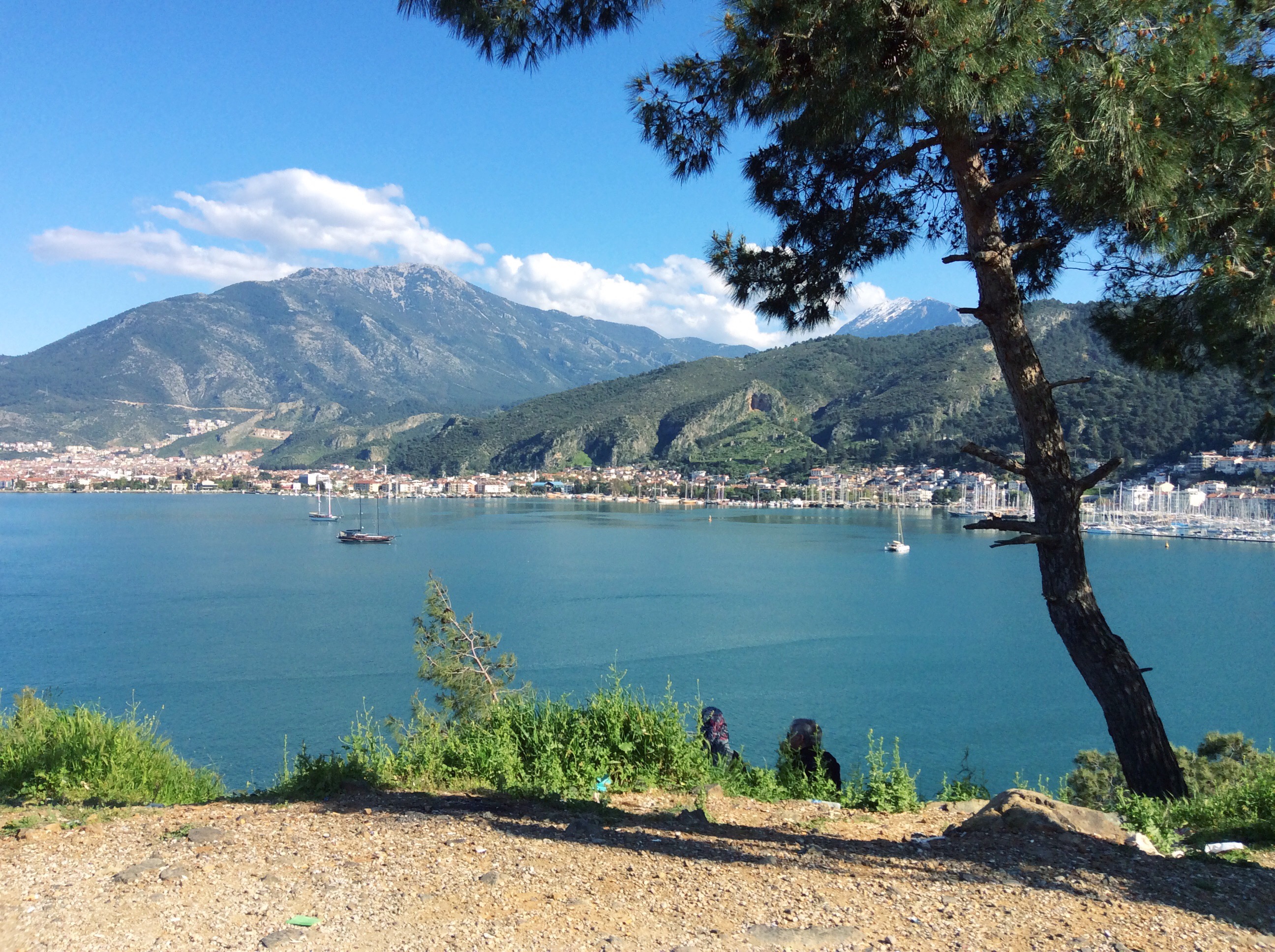
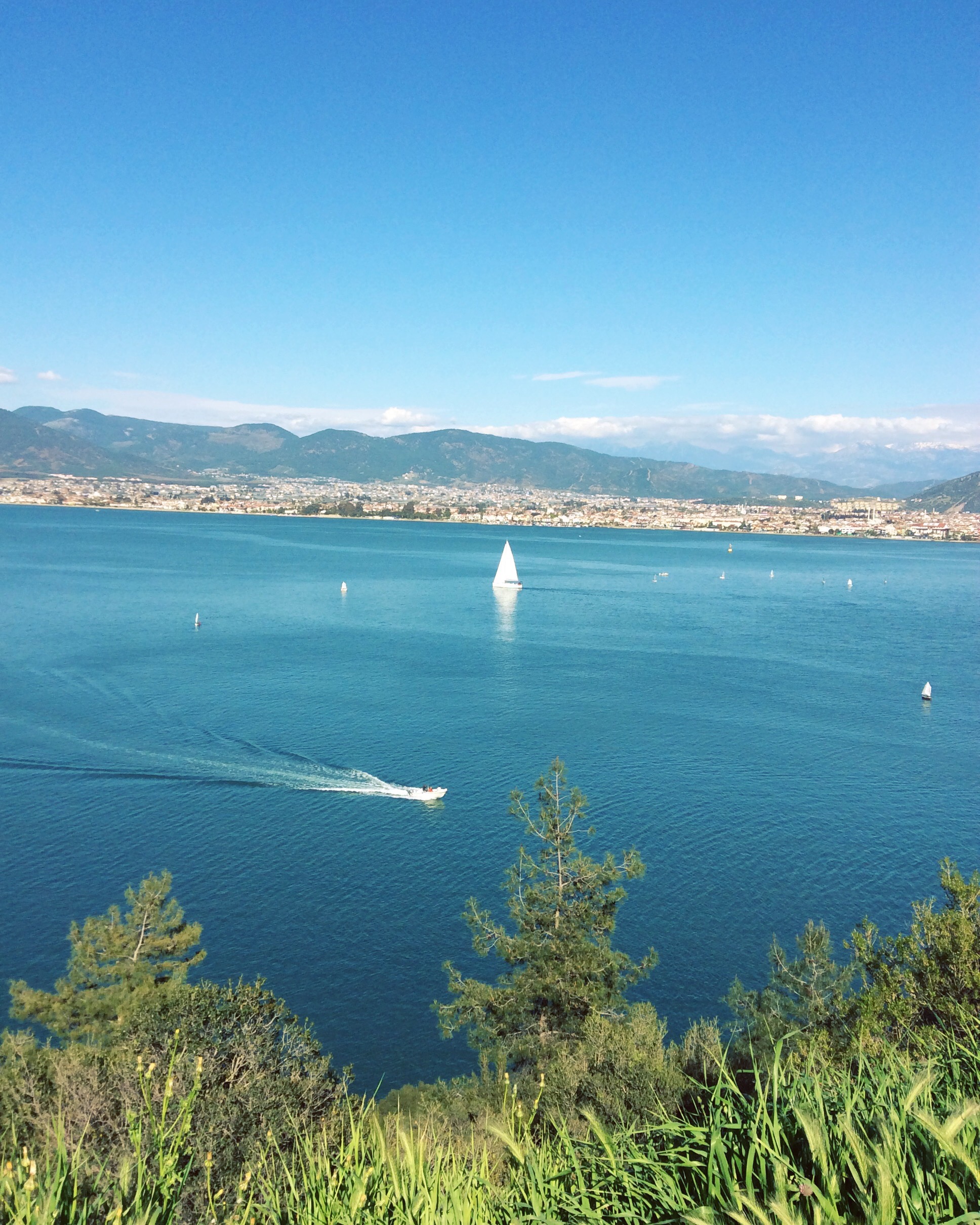
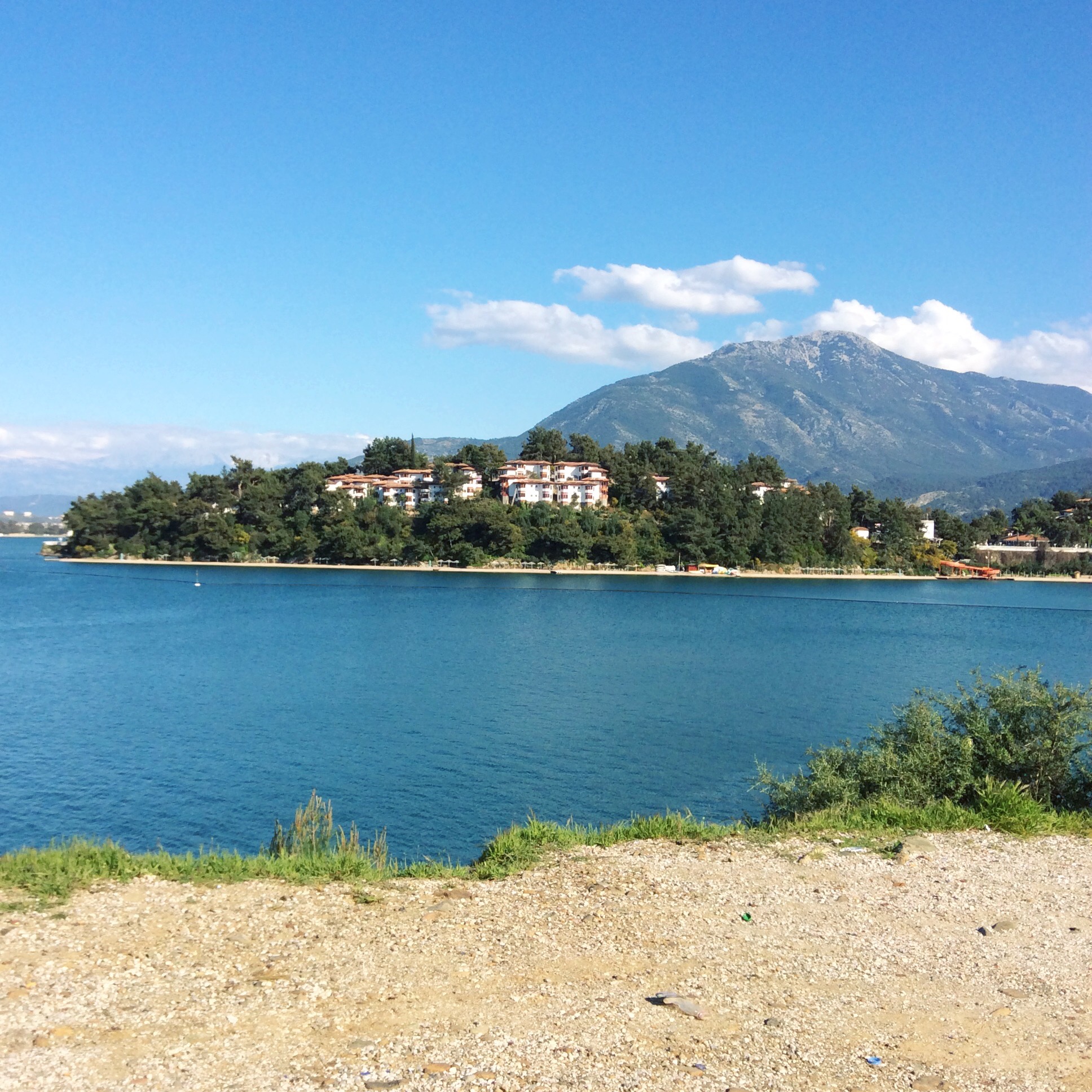
Right at the far end of Calis Beach, behind Şat restaurant, sits a bit of a hidden gem! I took the photo in 2014, but I assume you can still access the area now, I know there have been a few changes to that end of the beach. We walked around to the furthest point of the beach, where it was impossible to go any further without getting wet! It’s where the canal meets the sea, where the water taxis travel on the route to/from Fethiye/Calis. I believe the area is a kind of nature reserve, with wildlife such as crabs, fish, birds and ducks swimming around, as well as lots of reeds, plants and pretty flowers growing. The views from here are spectacular, offering a slightly different view point of mountains Babadağ and Mendos.
❤
Tag Archives: mountains
AUGUST PHOTO SERIES – DAY 17 – SNOWCAPPED MOUNTAINS

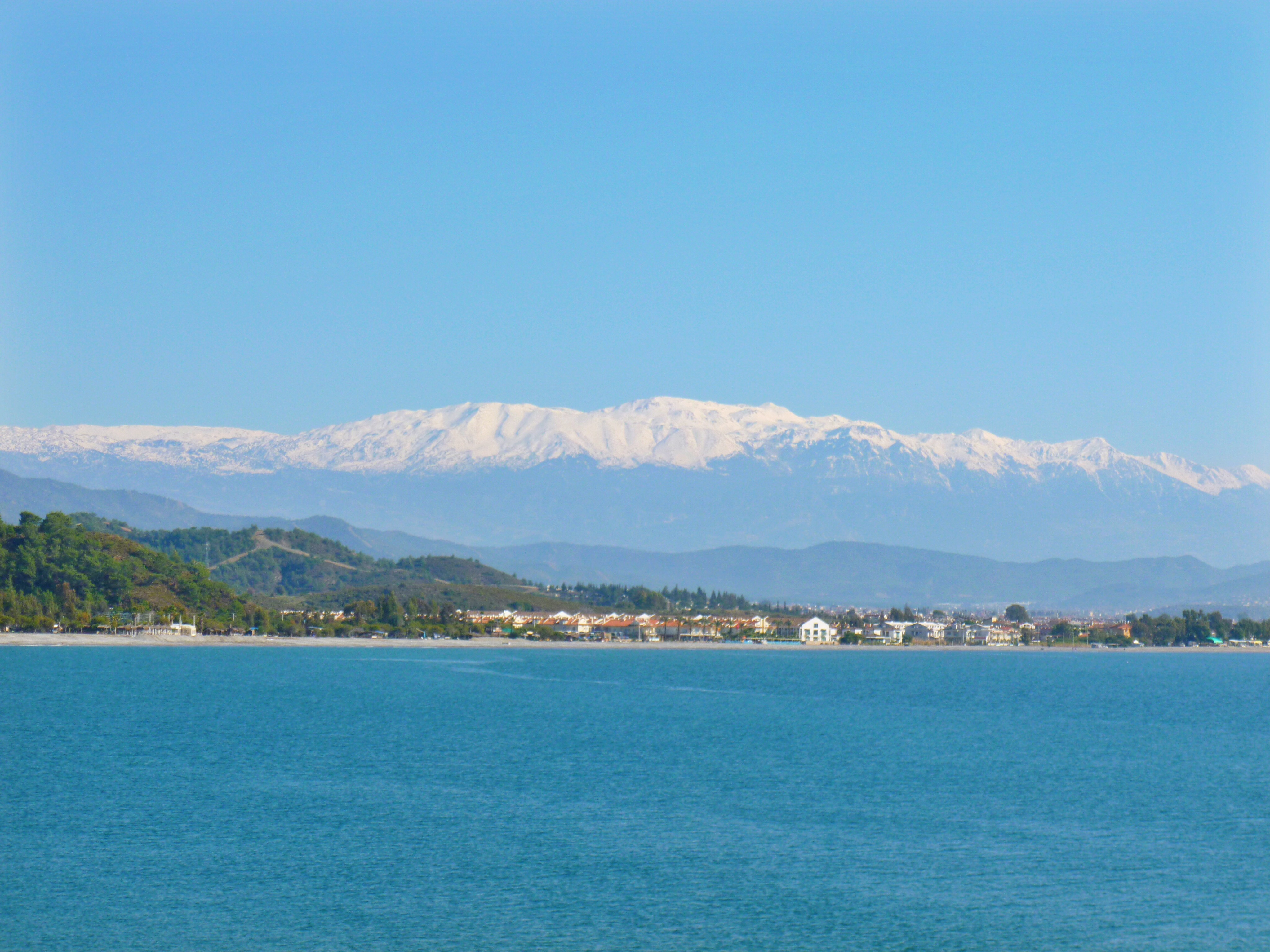
Although most people know Turkey for its almost-guaranteed sunshine for 6 months of the year, it’s not always hot…in winter it gets cold…VERY cold. Generally the coldest month in Fethiye is February, in my experience. I remember one winter it was around -2 degrees, with icy puddles outside. This photo was taken in January last year, on what was actually a warm day, but the evidence of winter was plain to see on the mountains in the distance – lots and lots of snow. It looks like I was in the sea, but I actually took the photo whilst on a hill off of Karataş beach, looking back towards Koca Caliş – you can see Sunset beach club and Jiva hotel in the centre of the photo. The mountains look so impressive covered in snow, but also vast and intimidating, a very prominent feature of the landscape even though they’re so far in the distance!
❤
AUGUST PHOTO SERIES – DAY 16 – Lake Köyceğiz
Whilst on a trip to Dalyan, we got on a boat and were taken for a short ride down Lake Köyceğiz, to one of the mud bath & sulphuric hot spring centres along the bank. It was good fun, but a little odd, swimming chest deep in mud and rubbing it all over yourself, then washing it off and getting into a hot bath that stinks like rotten eggs… all part of the experience, but not particularly attractive! The boat journey down the river, though was very pleasing to the eye. We were there fairly early in the morning and was one of the first boats out, so the water was very still with no ripples from other boat engines, allowing the reflection in the lake to be crystal clear. I love the contrast between blue sky and green trees, and the reflection acting like a mirror image. Apparently, the lake was formed 7500 years ago, as a result of several earthquakes. A major fault line runs through the lake, and this is were the sulphuric hot springs come from too! Nature at its finest.
❤
AUGUST PHOTO SERIES – DAY 9 – TURQUOISE OLUDENIZ
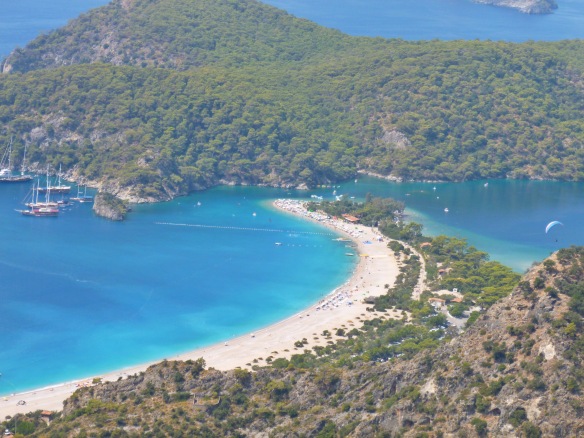
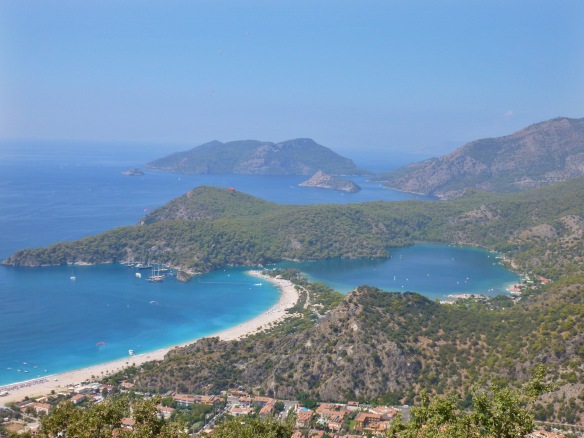
I couldn’t chose between these two photos – so today I’m using both. This is the stunning view from the start of the Lycian Way, a 540km walking trail between Ölüdeniz and Antalya. Quite controversially, I’ve never been a real fan of Ölüdeniz, I have always thought it looks absolutely beautiful from above in people’s paragliding photos, but when you’re standing down on ground level, it’s less impressive, too crowded and I always felt a bit disappointed. These photos though show just how wonderful it really looks from high up in the mountain side. The gorgeous turquoise colour of the sea really stands out, but the boats sailing outside the bay, and the pedalos in the lagoon are also visible, along with a few paragliders if you look carefully! We haven’t been right up to the top of Babadağ mountain yet, but I’m sure that it looks even more stunning from up there on a clear day. Sometimes the hustle and bustle of the resorts make us forget the real beauty we take for granted – but taking a step back (or a few thousand feet up…) makes you appreciate it all a bit more. Nature at it’s finest!
❤
I wrote a blog about the start of the Lycian Way a few years ago, if you want to read more: https://livingtheturkishdream.com/2014/09/23/oludeniz-from-above/

Pamukkale – a Natural wonder?
Pamukkale, meaning “cotton castle” in Turkish, is a place of natural beauty in Denizli province. It is a UNESCO world heritage site and tourist hot spot for many visitors to Turkey, who travel from all over the world to see it.
We have visited Pamukkale twice, once in 2011, and once in 2016. The site itself is in a purpose built touristy town, which now doesn’t really have any other purpose other than to provide basic accommodation for a night or two for visitors of the site. All around there are gift shops selling souvenirs like fridge magnets, postcards and posters showing Pamukkale during its glory days, bright white travertine terraces filled with turquoise blue waters. I think perhaps they need to reevaluate their advertising material though, as I will discuss later on.
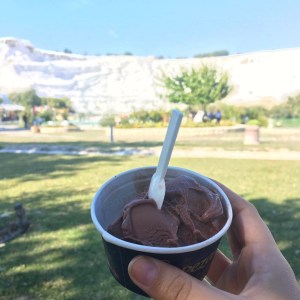
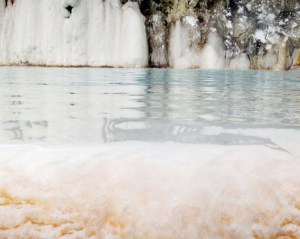
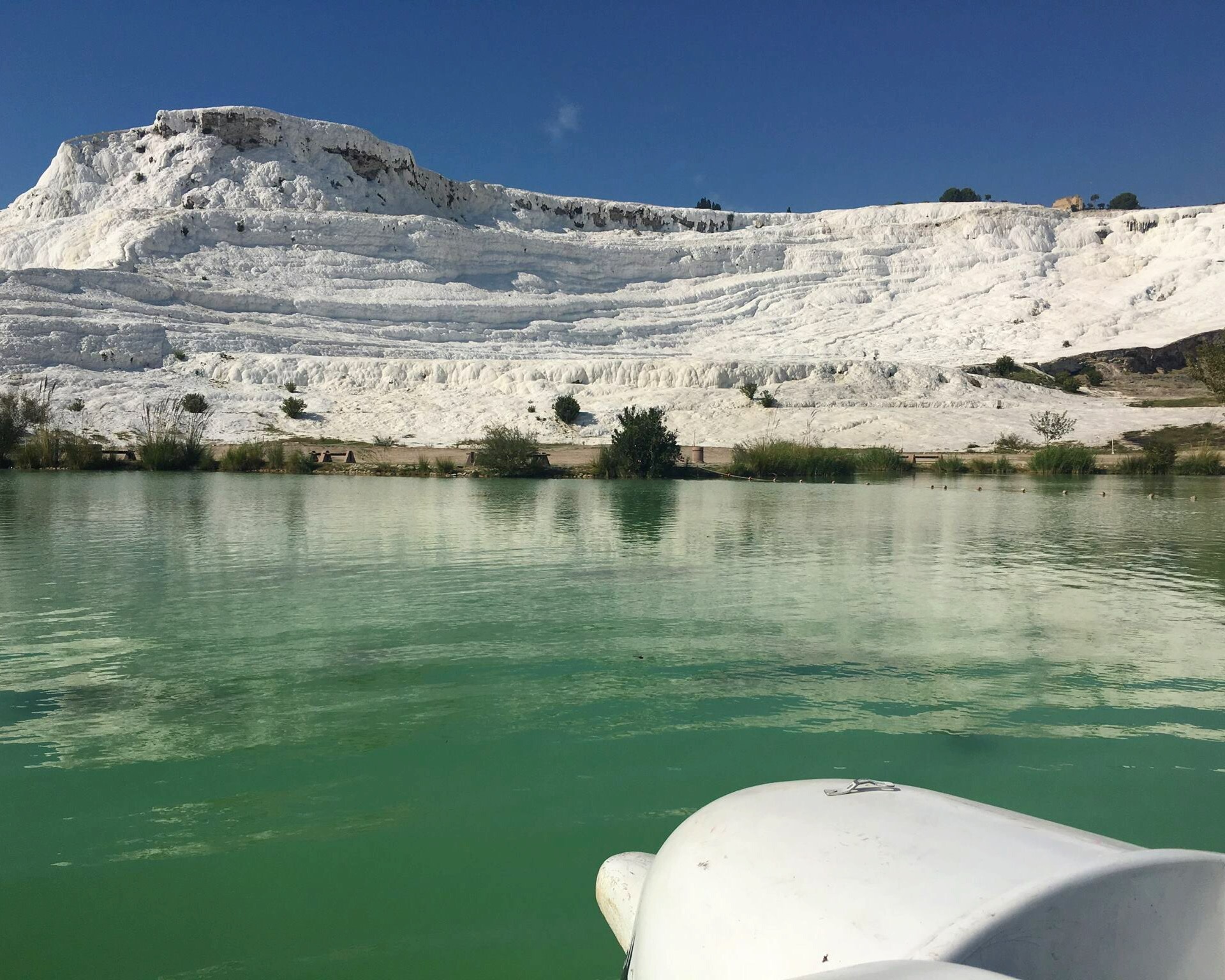
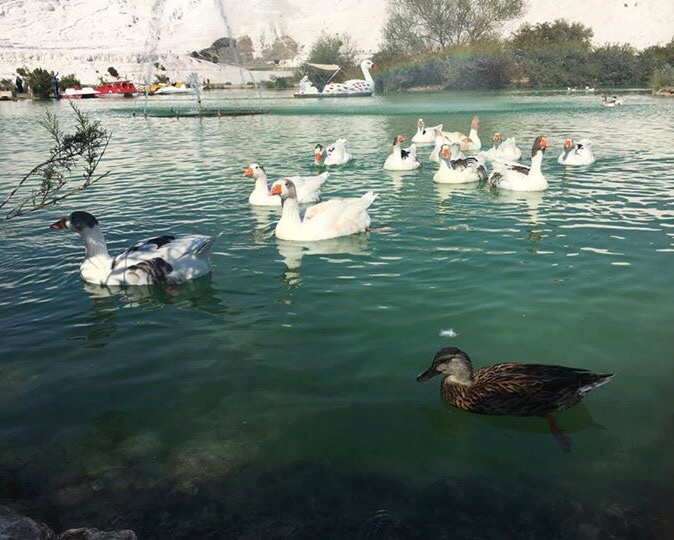
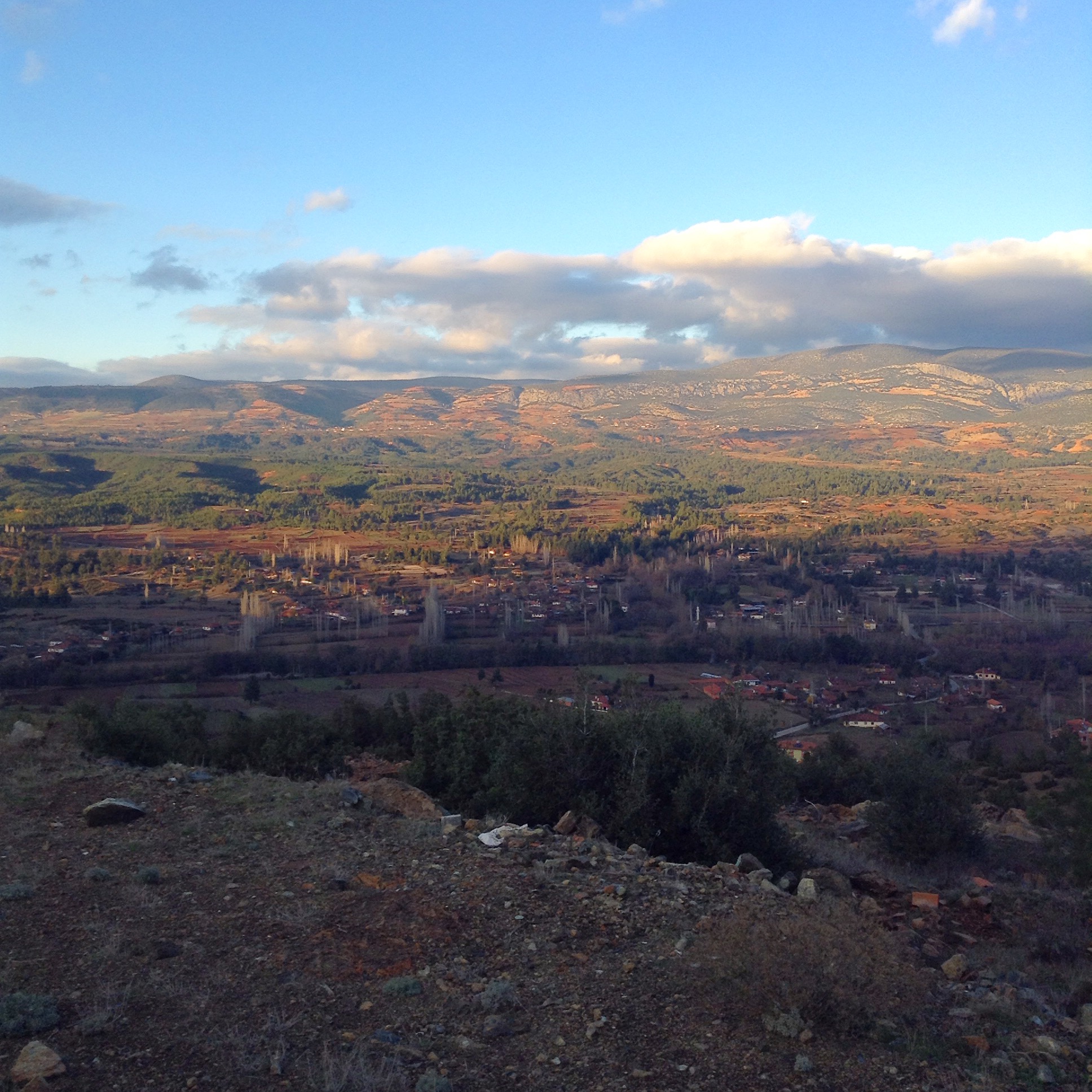
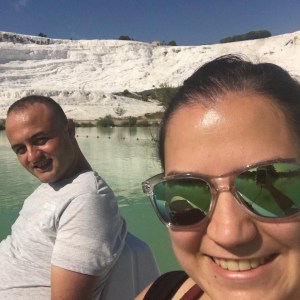
When you approach Pamukkale from the main road, you see the huge white ‘cotton castle’ hills which look quite dramatic against the rest of the surroundings – it seems very out of place, but strikingly beautiful and different. There is a lake around the bottom, which has ducks, frogs, turtles, fish and other wildlife swimming around. When we visited back in 2011, the water appeared a different colour, and the bushes were growing around with beautiful pink flowers, but when we visited last year, the water was definitely more ‘green’ with less flowers, as you can see from the below two photos. The last time we were there, we had a go in one of the pedalo’s that were available to rent for 30 minutes – it was a spur of the moment thing and quite funny! It got us a closer look at the wildlife, and we spotted a few small turtles swimming around us. After the pedalo, we stopped for an icecream, real Turkish dondurma, the thick, almost stretchy kind, which was lovely. We sat on the grass eating it, admiring the view and were approached by two ducks and a cat, all wanting to share with us!


There are two main entrances to the protected Pamukkale site itself, one at the bottom, one at the top – we have used both. The entrance fee is currently 35tl, and it is open from 8am-9pm in summer, 8.30am – 5pm in winter according to the website. 
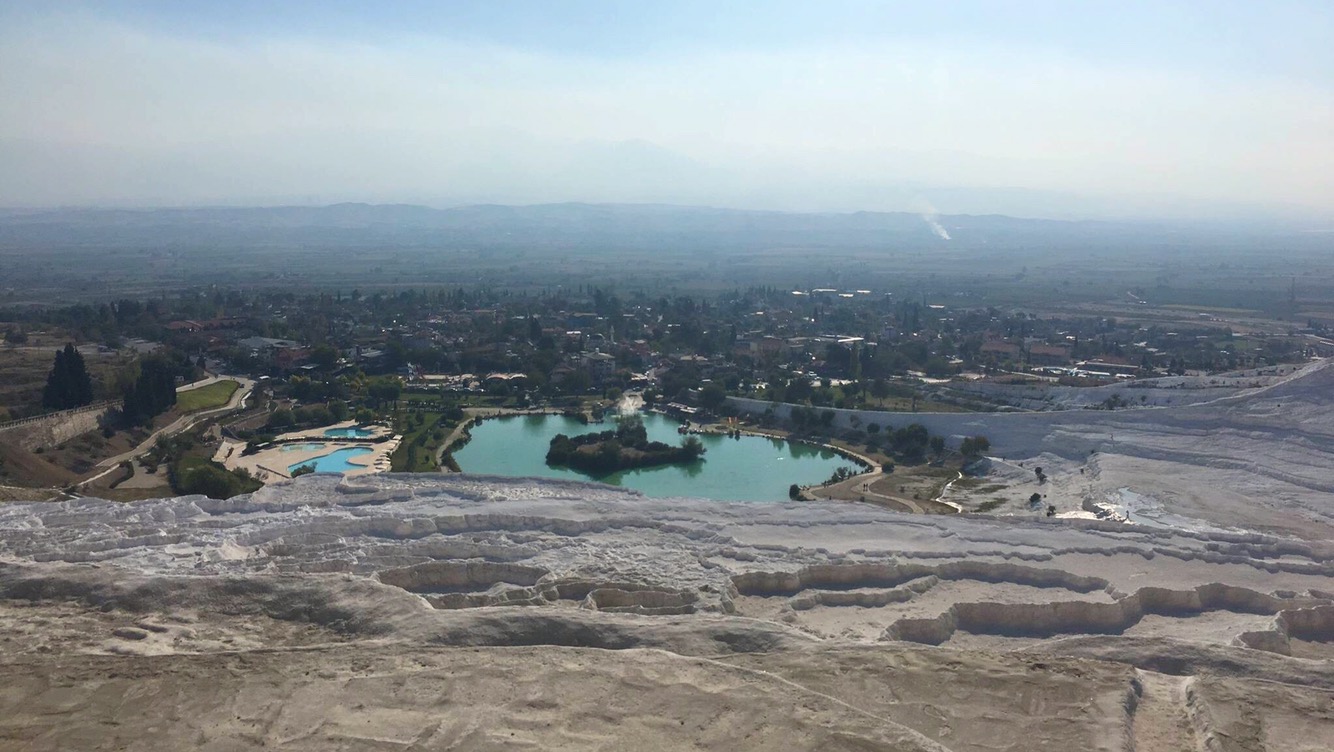
The views from the top of Pamukkale are amazing, my photo doesn’t really do it justice. You can see for miles and miles, and you seem to be a lot higher up than it looks from below.
To walk on the white formations themselves, you have to remove your shoes, so make sure you bring a bag or rucksack to put them in. There are security guards armed with loud whistles who aren’t afraid to blow them straight at you if you don’t comply with the no shoes rule!
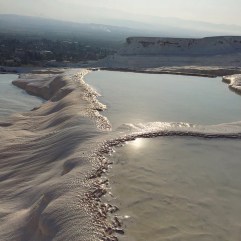
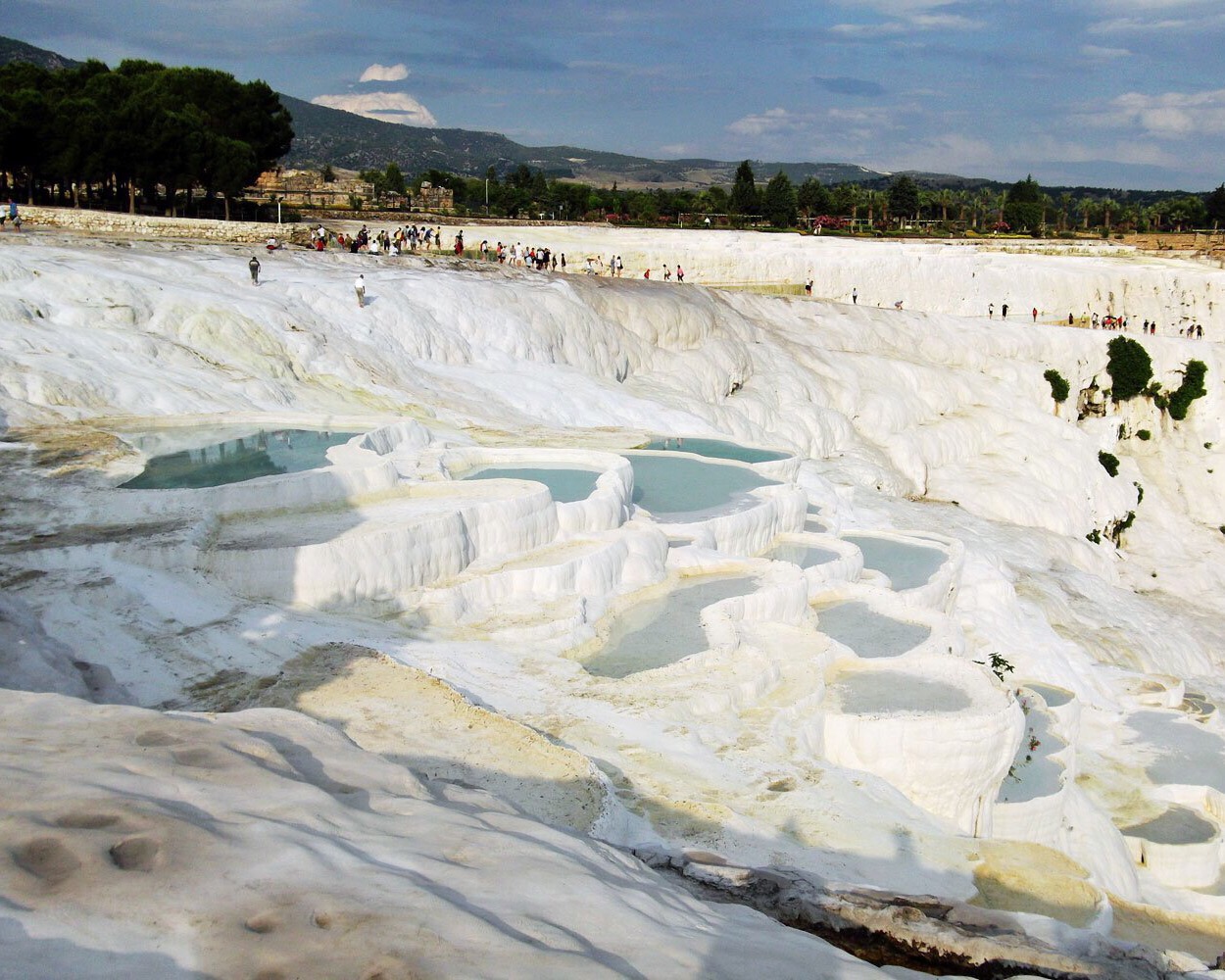
You’d expect it to be cool, it looks like it should be made of ice, so seeing such a thing in the middle of 30oc temperatures seems bizarre, but of course it isn’t ice at all, it’s made of travertine, a kind of limestone deposit from the calcium-rich natural hot mineral springs. Some parts are smooth and slippery under your feet, other parts are solidified and feel sharp and spikey, so the walk down/up isn’t really an easy one. In summer, particularly in the afternoons when the tour groups arrive, the place gets very busy, but we visited in April and October so avoided too many people both times, luckily. The white deposits do look beautiful, and its certainly a brilliant place with great photo opportunities and beauty, however, I do find it a bit disappointing, as the natural beauty seems to be threatened.

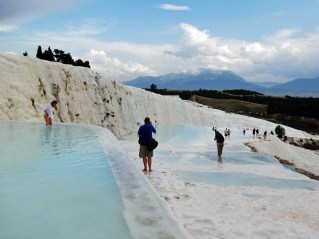
Apparently, back in the 60’s and 70’s hotels were built at the top of Pamukkale, which stole the vital water supply to fill their own thermal pools and spas and this had a huge detrimental effect on the site. There was also a road built through the site, with motorbikes allowed to drive up and down! The hotels and road were demolished when the site became protected and the damage became obvious, but I don’t think it’s ever recovered, and in an effort to restore the natual beauty, they have actually ‘faked’ a lot. If you google Pamukkale, or look at any souvenir fridge magnets, postcards or poster adverts as I mentioned earlier, you will find images of people in their swimming costumes laying out on the natural terraces, bathing in the travertines, basking in the sun. This is no longer possible, as it was found that the bathing, suncreams, oils, perfumes, shoes and general human interference, was affecting the natural beauty and discolouring the once pure white deposits.

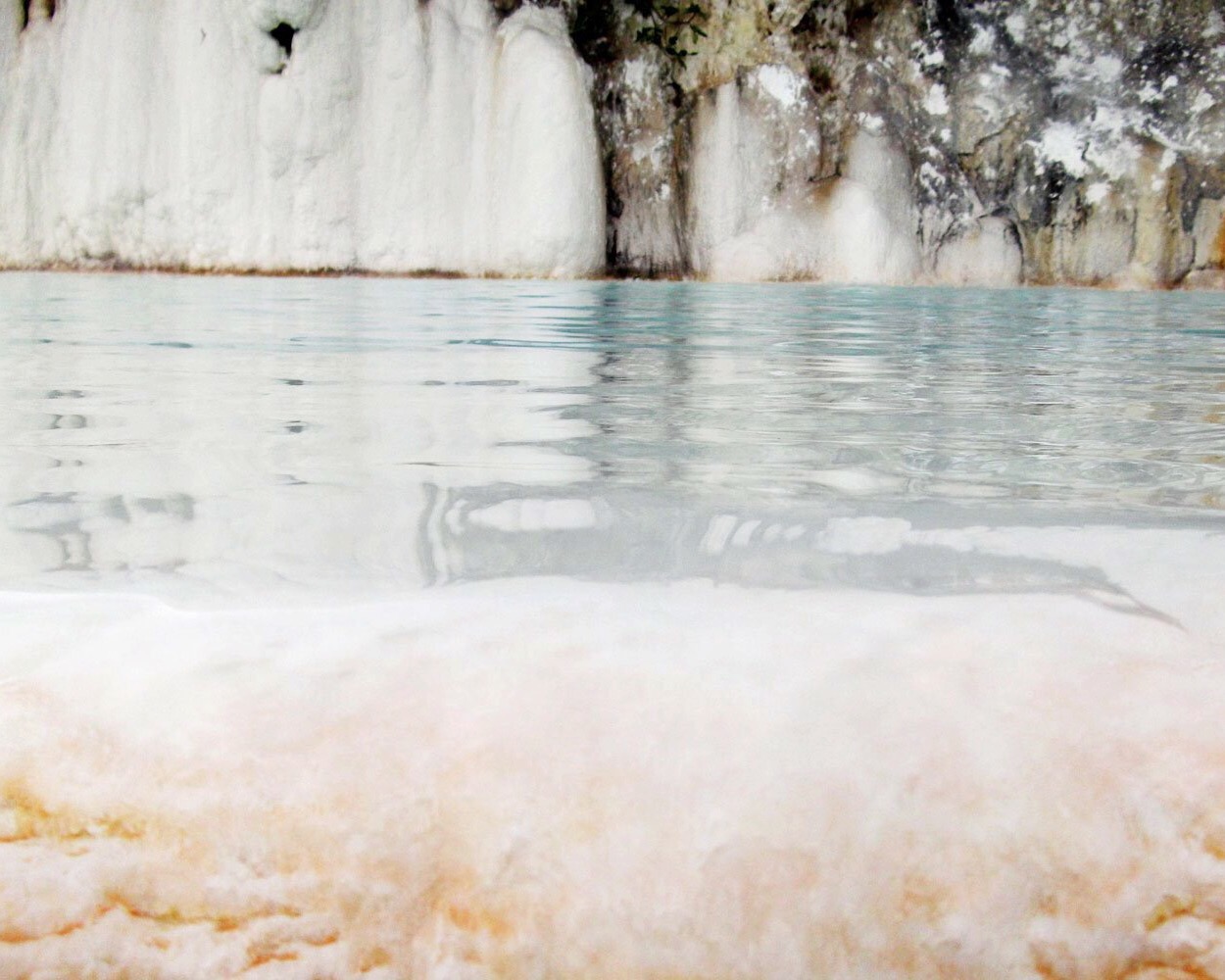
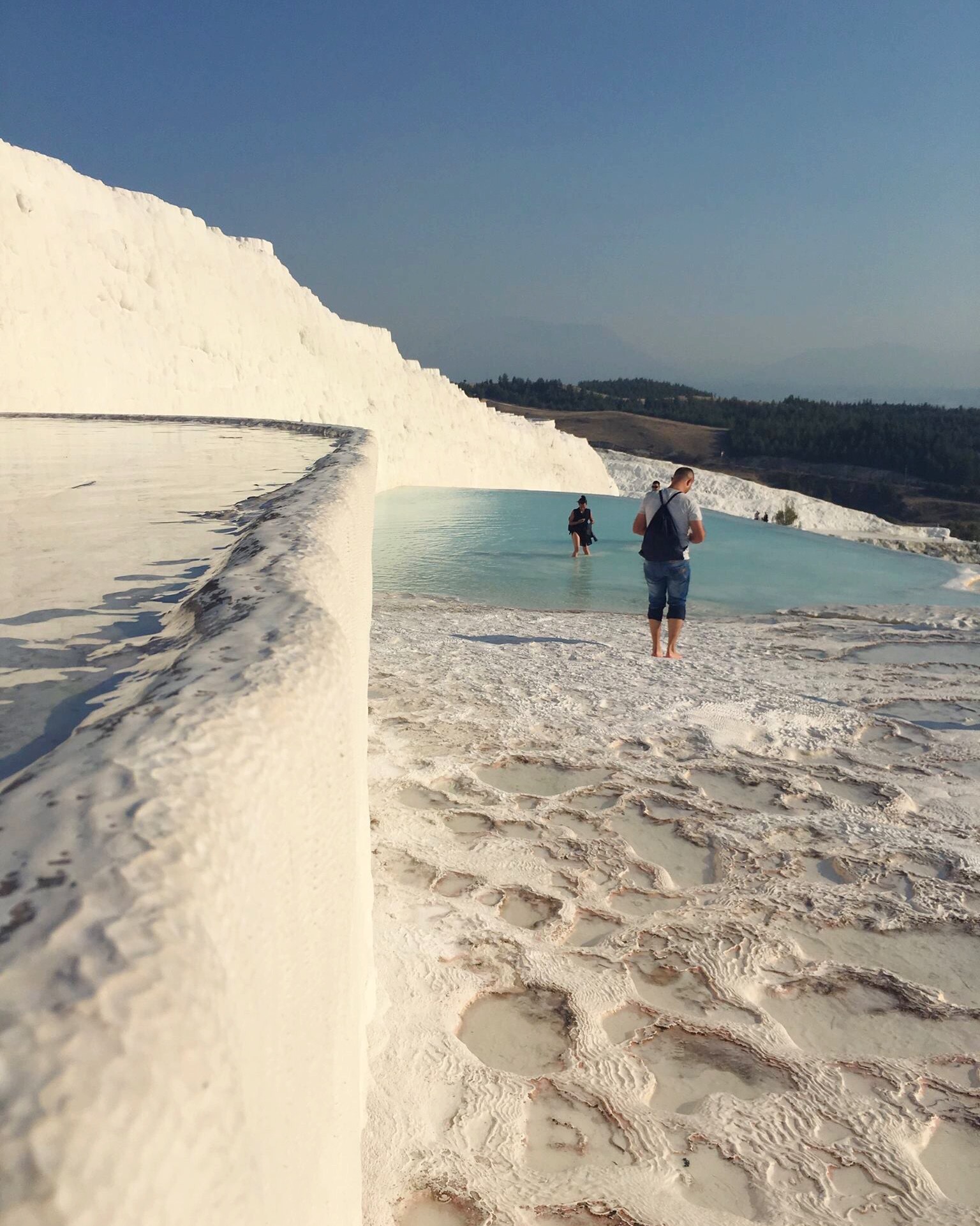
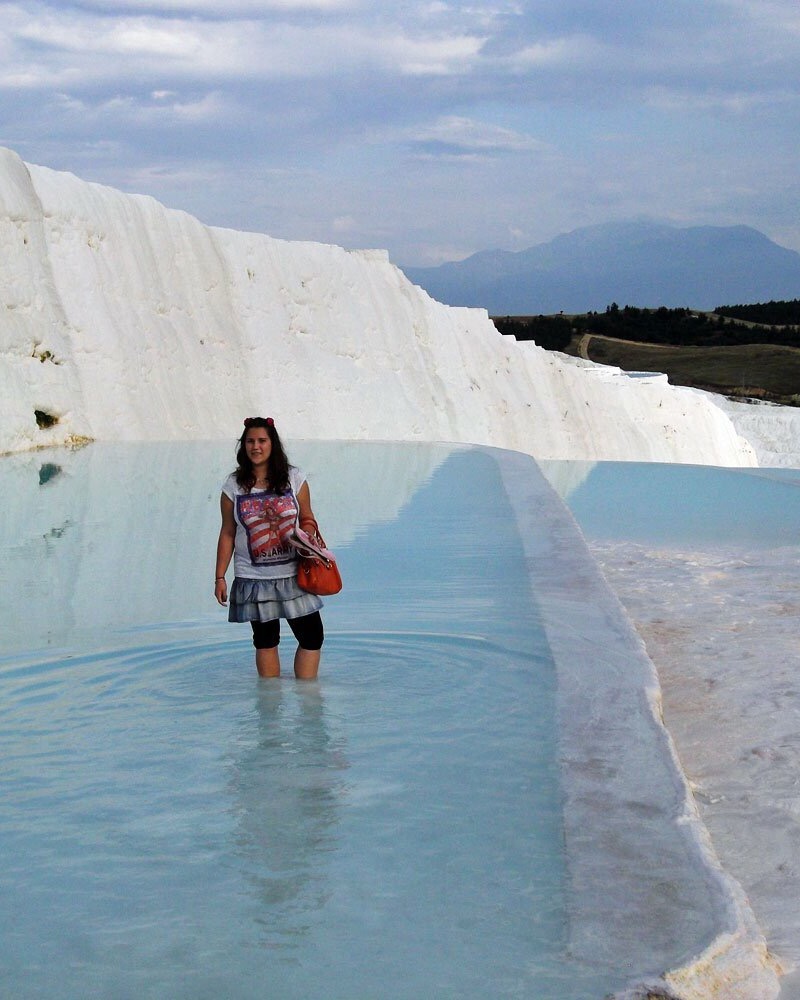
Understandably, you are now only able to walk on very specific sections of the site, and the security guards I mentioned above are strict at enforcing this. There are pools you are allowed to walk and paddle in, all the way down the side of the walk way from top to bottom, but these pools are all man-made which is really disappointing to me. Even though I understand why they had to intervene and prevent further damage to the natural beauty of the site, I feel like they could have made more of an effort to make the man made pools mimic the natural, flowy, waterfall like terraces. Instead, they are were all made the same size, shape, height, and water diverted over them to encourage the deposits to form. Sure, it’s still fun to paddle in them and get some good photos, but the thing is, I’m not sure if people realise these pools were man made! The below photos were taken in 2011 but show the height and uniform shape of the man made pools.

The natural pools do still remain in tact, but are rarely, if ever, filled with water as the flow is diverted down through a man-made channel and dam to other section, it’s a shame the water isn’t left to flow naturally. The photo on the right isn’t one I took, just one I found on the internet, presumably taken a few decades ago. The photo on the left is one I took of the same pools as they looked in 2011, almost dry and no longer able to be bathed in like the adverts or tour operators all suggest.
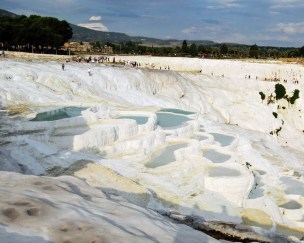
Sadly, despite being a protected world heritage site, the efforts they have gone to to prevent further damage to the natural beauty of Pamukkale and its travertines do not seem to be working. The photo on the left below is one I took in 2011, the one on the right from almost exactly the same angle in 2016, showing even more discoluration and erosion occuring over the years, and the pools all dried out.

I know I sound very negative but I do still think Pamukkale is well worth a visit, just go in with realistic expectations. While researching to write this post I looked on Tripadvisor and found many, many bad reviews complaining about the ‘dry pools’ and commenting how it doesn’t look like adverts they were shown when booking the trip. My advise is definitely go and visit, but just know that it no longer looks as it did 30-40 years ago when those pictures were taken, I don’t know why they don’t update them to be honest as it’s still impressive, just different.
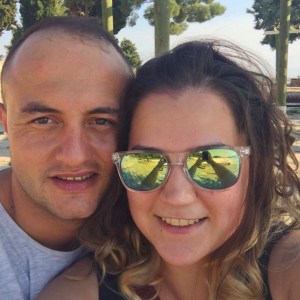
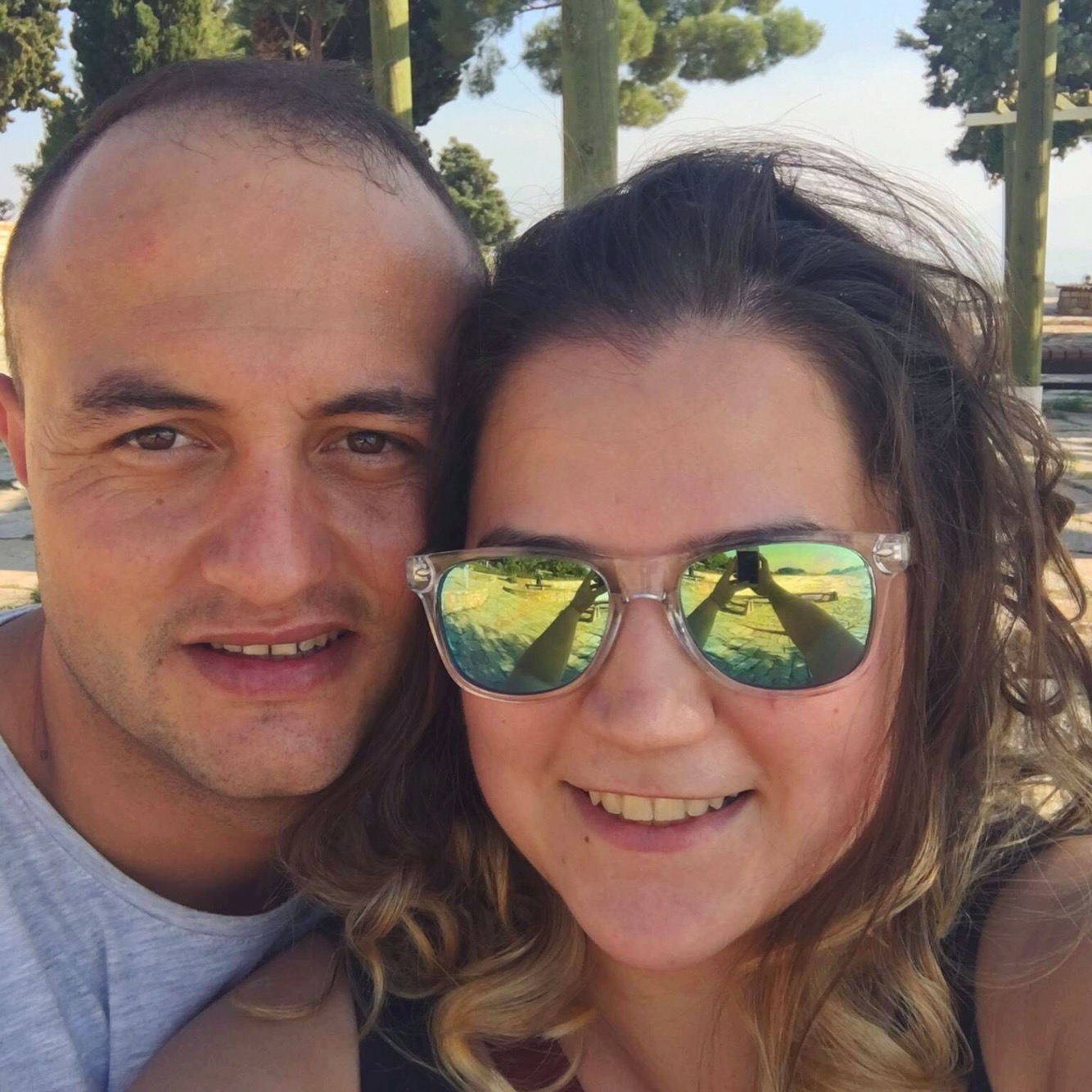
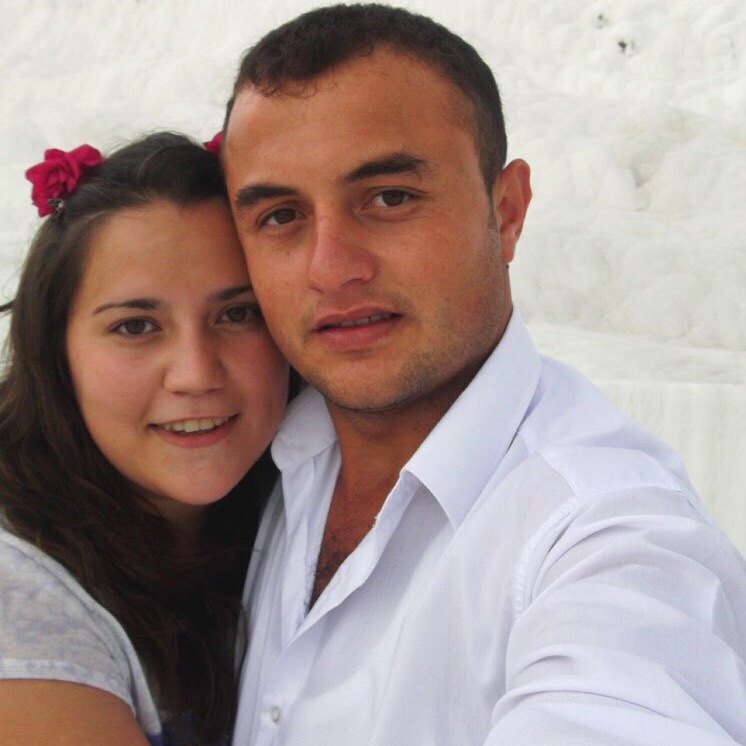
The travertines aren’t the only things that have aged in the last 6 years – check out the two photos of us at Pamukkale taken 5.5 years apart.
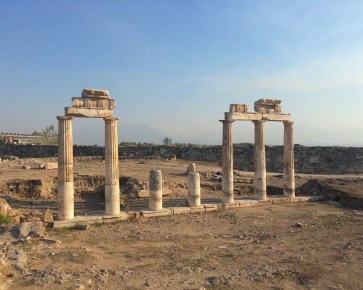
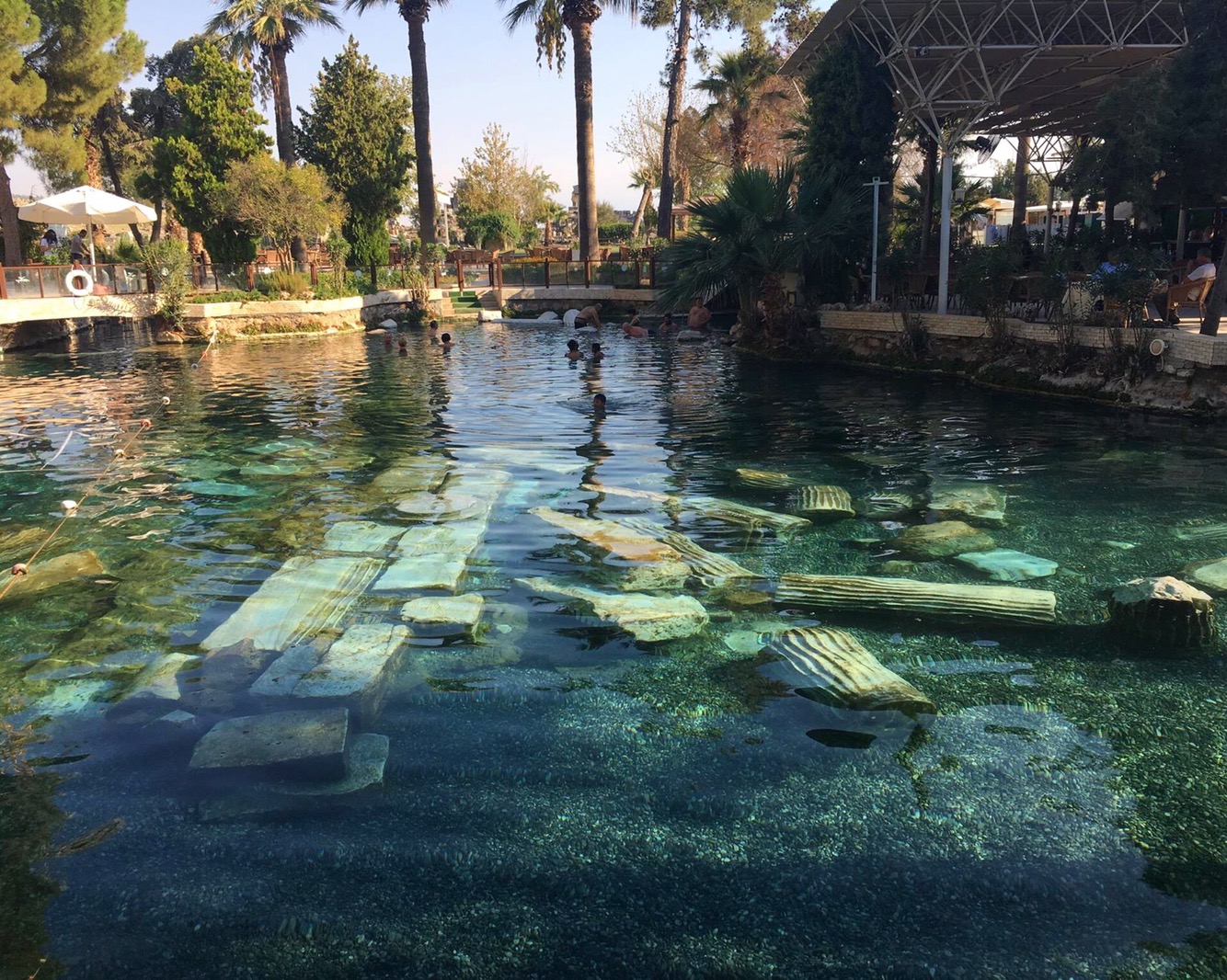
Right at the top of the the white terraces of Pamukkale sit the ruins of the ancient Greek-Roman city Hierapolis. During the Roman period, Hierapolis had very much a spa and health focus with lots of baths. People flocked to the baths as they thought they had healing properties, which is ironic as Hierapolis has the largest necropolis/cemetery! It is thought many people traveled to the city to spend their last days, hence the large cemetery. One of the thermal pools remains and is open to the public for a fee – according to the website its 32tl per person to swim, but we have never done this as we thought it was way too expensive, but there are seating areas and a cafe for people who don’t wish to swim, it’s a very pretty place surrounded by greenery and flowers. The pool is very warm from the hot springs, and is still thought to have health benefits. I’m not sure how much of the pool is actually natural – but it’s said that Cleopatra swam there, or close by, hence it’s advertised name ‘Cleopatra’s pool’. Ruins in the pool apparently fell during major earthquakes, some of the marble columns are even thought to have fallen from the Temple of Apollo, making the pool sacred.
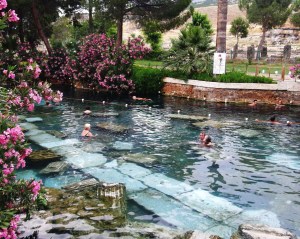
As well as the pool, many other beautiful ruins can be seen at Hierapolis. There are lots to explore, ancient streets, temples, statues, necropolis, gates, churches and the most impressive, a huge theatre which can seat thousands. You can walk right to the top of the theatre for amazing views but we have never done this. There is also a museum which you can enter for a small fee with even more to explore. Honestly there are so many impressive detailed ruins to see over quite a large area, you could spend a whole day just walking around slowly seeing it all. My photos don’t really do it justice, as by the time we’ve walked around Pamukkale and have been in the sun for an hour or two, we are too hot and bothered to walk around the ruins as well, as there isn’t much shade. We definitely need to go back and see a bit more, maybe in a cooler month, and definitely climb the stairs to the top of the theatre.
Back in October when we were there, they actually had moped’s to hire to help get around the ruins quicker as they cover such a distance, and although handy, I’m not so sure it’s a good idea!


All things considered I really do think Pamukkale is worth a visit, even though its a long way from the resorts in Fethiye etc. It’s the single most visited tourist spot in Turkey, apparently, and it’s easy to see why, but don’t go in expecting it to look as it did 40 years ago, or you will be disappointed. If possible, try and stick around the site for sunset because I’ve heard that is especially beautiful to witness there.
It’s lovely to see the beautiful natural creations, however, the inevitable interference from humans, for the purpose of tourism in particular, has threatened this natural beauty – with it being a UNESCO World Heritage Site, I hope it will continue to be protected.
A Delicious Village Breakfast
Breakfast is a big deal in Turkey. Arguably its the most important meal of the day, and Turkish people turn it into a real family affair, especially at weekends.
Although I’d had countless traditional Turkish breakfasts, the open buffet one at Bogazici in Fethiye on a sunday being my favourite, I’d never really experienced a proper köy kahvaltısı / village breakfast, so on the morning after our wedding day we made the short 20-25minute car journey to a local one just outside Calis/Fethiye, in Kargı village.
The place we went to is called Yalçın Apart & Yörük Müzesi. It is a family run restaurant but only has one thing on the menu – breakfast. Perhaps not breakfast as you know it, not a cornflake or English fry up in sight, and although similar to the usual Turkish breakfasts it offers a bit of variation.

The whole restaurant has a real rustic feel to it with lots of wooden benches upstairs to sit on and admire the view over the village. The village is full of citrus and olive trees and it is lovely to look out on the sea of green, with Babadağ and Mendos mountains in the distance – I always love seeing these mountains, it means Fethiye is close!
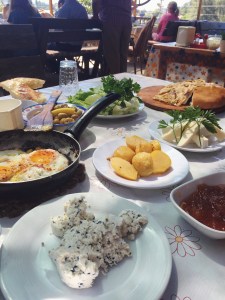
Within minutes of arriving and being seated upstairs we had trays full of small plates and dishes filled with all kinds of food delivered to our table and decoratively laid out in front of us. The menu said ’25 pieces’ made up the breakfast and although I didn’t count it seemed like even more than that – what’s even more impressive is that all the plates are refilled as soon as they’re empty. You could literally sit here all day eating! Among the delights on offer were fresh produce such as tomatoes, peppers, cucumber, lettuce, olives, eggs, potatoes, homemade butter, a variety of cheeses, honey, jam, clotted cream, fresh bread, gözleme filled with cheese and parsley and a few other dishes that neither of us could identify! It was so amazing, and so filling. The only thing we managed to actually finish was the eggs and the bread, it felt like such waste. They also bought us glasses of mixed orange and pomegranate juice which was refilled as soon as we put the empty glass down.


The best part about all this, it was cheap! 25tl per person, which is less than £6.50!! The views, the service and the food was all brilliant.
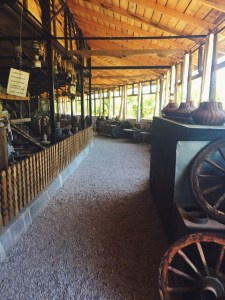
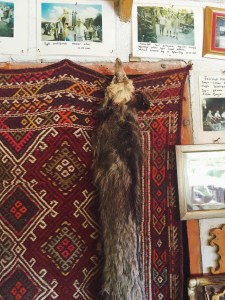
The restaurant also doubles up as museum. Just behind the main building is a little wooden barn, full of artifacts from years gone by. It’s free to enter, and was created by the owner of the restaurant, Enver Yalçın. His intention was to give people an insight into the life of the Yörük people, the nomadic people living around Fethiye and Antalya in the Taurus mountains. The museum has over 1600 pieces, including tools, utensils, rugs and artwork created and used by his ancestors, which he gathered from villages all over the area, along with photographs of some of the nomadic people. Some of the things were very interesting, but some quite disturbing (the animal skins!) The funniest part was an old cabinet which had obviously been moved to the museum purely for storage – the spongebob sticker on the outside rather changed the ‘old’ vibe of the museum! I also loved the notice on the entrance – ‘ chickens will come in, please close the door!’.


This is because the land is also home to some animals – the usual farm animals, chickens, birds etc and a donkey or two. A few years ago this restaurant was made famous in the local media when it married two of it’s donkeys and held a ceremony for them – these animals were later taken away as they were found to have poor living conditions on the site, but they seem to have since bought more. They had a sign advertising very expensive donkey milk for sale, so I presume they own more than the one I saw, but I didn’t see their living conditions so I have to be honest and say I don’t know if things have improved for them.

One last thing to note, the whole restaurant feels very traditional and very rustic and most things (minus the spongebob sticker…) reflect this, including the toilets which are the typical, slightly shocking hole-in-the-floor type! I’ve also been told that some of the tour-guide companies make stop off’s at this restaurant so it may be busy at peak times. Fortunately, on the Thursday mid-morning we went it wasn’t too busy, and we were really impressed.
For 50tl / less than around £13 for 2 people at today’s exchange rate, it’s definitely worth a visit to experience a traditional village breakfast and enjoy the beautiful views.


A Drive around the Fethiye Peninsula

The Fethiye penisula is a beautiful place to drive around, with stunning panoramic views of Fethiye, Çalis, Şövalye Island and the Mediterranean sea.
While I was over there in April and we had a rental car, we took full advantage and drove around after a BBQ at Aksazlar koyu. It was a beautiful sunny day, and we had Boncuk with us so off we went, windows open, ears flapping and tongues out, cruising along the single, circular road.
We passed Aksazlar koyu and the huge private hillside resort of Letoonia and pulled over the car at one of the many popular look out points. There were a few cars there, people on scooters, mopeds, quadbikes, some had wandered down the cliff slightly and were sat among the trees eating sunflower seeds, while others, like us, just stopped to take in the views and enjoy the tranquility.
You can never quite capture the moment through a camera lens, you have to be there to appreciate just how beautiful the views are – to the right, Babadağ mountain makes a wonderful backdrop to the green trees, red roofed houses and sails of boats in Fethiye harbour, and to the left, views across the water to Calis and it’s beach.


We got back in the car and carried on driving, but not for long before we had another ‘photo’ stop, if you do drive along here you’ll know exactly what I mean when I say you’ll want to stop every 5 minutes because at every turn you’re greeted with a different, stunning view. Along the way around you come across and go past several little bays, Küçük Samanlık Koyu, Büyük Samanlık Koyu, Boncuklu koyu and Kuleli to name a few – plenty of places to drive to and stop for a drink and a dip in the sea, we often go to these bays with our friends for picnics and the calm, sheltered water makes them ideal for children swimming and paddling.


We bypassed them all and just drove. As you get further around the hillside, the drive does became a bit..hairy. Narrow road, pot holes, bumps and falling rocks. It’s quite nervy when you’re in the passenger seat and all you can see to the right out of your window is a steep drop down to rocks and the deep, blue sea, I definitely wouldn’t recommend doing the drive at night, we did once, at twilight, and the road isn’t lit at all…eek!
I could just pack up the car with a picnic blanket, food, book, music and sit and look at the views for hours. Calm blue sea, sailing boats, crickets chirping – pure serenity.
You can’t beat the feeling you get when you pull up in the car, get out and stand at the edge overlooking the place we all love, standing next to strangers admiring the same view, and give each other that knowing look – ‘we are so lucky.’
Village adventure – day 3
We woke up on our last day in the village and knew we were going to be busy – we planned to leave the village at 12pm and travel to the nearest city center to visit more of Berkay’s relatives. The previous day Berkay’s dad had announced that since all the family was going to be together (including me, Berkay and both his brothers), something that happens very rarely, he was going to kill one of the animals from his garden so that we could all have a big family BBQ. 
By the time we had woken up, had a shower and packed our bags ready to go, it was 10 o clock and Berkay’s grandad had just arrived to do the honors. I walked over to him to say hello with the traditional hand/head kiss and he seemed impressed by this, even more so when he said ‘nasilsin?’ and I answered in Turkish. There wasn’t much time to sit around and talk and we all headed out to the garden. I was walking around having one last look at all the animals and became friends with a goat, I was talking to him (yes…talking…) and he was licking my hand, it was all very sweet. Little did I know, that an hour later I’d be eating this goat for dinner.

Just 10 minutes after my encounter with the goat, Berkay’s brother walked into it’s little pen and led it around to the side of the house where they had been digging a hole. I knew what this meant, the poor goat was the chosen one.
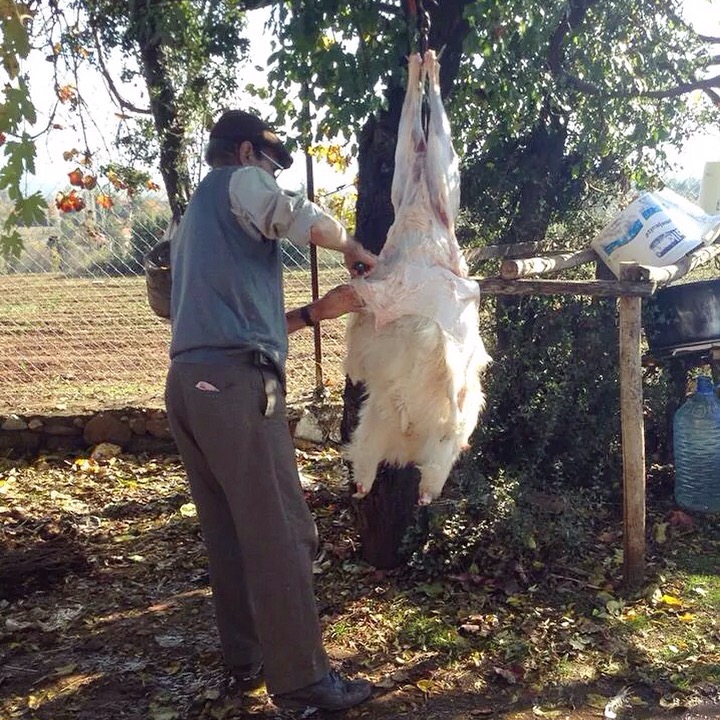
I’m not sure what possessed me, but after giving him one last little stroke, I stood and watched as they removed it’s collar, laid it down with it’s head over the hole in the ground and tied it’s legs together. The goat didn’t protest at all, I guess it knew what was coming as much as the rest of us. Berkay’s grandad slit the goat’s neck, the blood drained out into the hole and that was that. Over in minutes. Quick, calm and as a little suffering to the goat as possible.
The worst part for me came after, was watching his grandad strip down a piece of skin from the goats ankle and blow air (from his own mouth…) into it, blowing the poor goat up like a balloon. I wasn’t entirely sure of the purpose of this, but I researched online and it says it makes it easier to skin them by doing this first. At this point I decided I didn’t want to watch anymore, and wandered back to the other animals instead, one of the sheep had actually escaped the pen it was in and was actually stood watching what they were doing to the goat… I wonder if it actually understood what was going on though.

I went with Berkay in the car to pick up his cousin and her daughter, who were coming back to the family house to enjoy the BBQ with the rest of us. It was a 20 minute drive and by the time we got back, the goat had been fully skinned and its meat was now lying on trays being chopped up into pieces. Including it’s head, eye, brain, intestines, liver and other organs. Bleugh. The family will probably make soup and other dishes out of these parts, they certainly don’t waste any edible parts – they even gave their dog the goats four raw hooves.


We all sat down to eat the BBQ, which included the lovely çintar mushrooms we’d found the day before, and it was really delicious. Of course I felt sorry for the poor animal we were eating, but I’m not vegetarian and eat alot of meat. We don’t usually think about where our food comes from because it’s all cleaned, neatly packaged and sold on supermarket shelves, we take it for granted and don’t consider where it actually comes from, so it’s definitely interesting, although a little disturbing, to see the process from furry animal in the garden to lump of cooked meat on your plate.

After eating, it was time to say our goodbyes. Berkay’s step-mum cried when we were going and gave us both big hugs. She is really sweet, she sent us home with a massive bag of onions, spinach, spring onions, nuts, butter, chicken and leftover goat, all things grown on their farm! I really, surprisingly enjoyed our time in the village, and I really didn’t expect to. It was just so peaceful there, so relaxing and it felt so far away from everything else, no worries, no thinking about anything.

us with Berkay’s stepmum.
But now it was time to change out of the village baggy pants, say bye to the lovely people and views and head to the city instead…

Village adventure – Day 2
When I woke up the morning after we arrived in the village and looked out of the window, I won’t lie, I definitely thought ‘what on earth am I doing here?’ – it was the first time I’d seen the place in daylight (at least since I’d visited 3 years ago..) and to someone not used to living this way, it was quite a shock to the system.

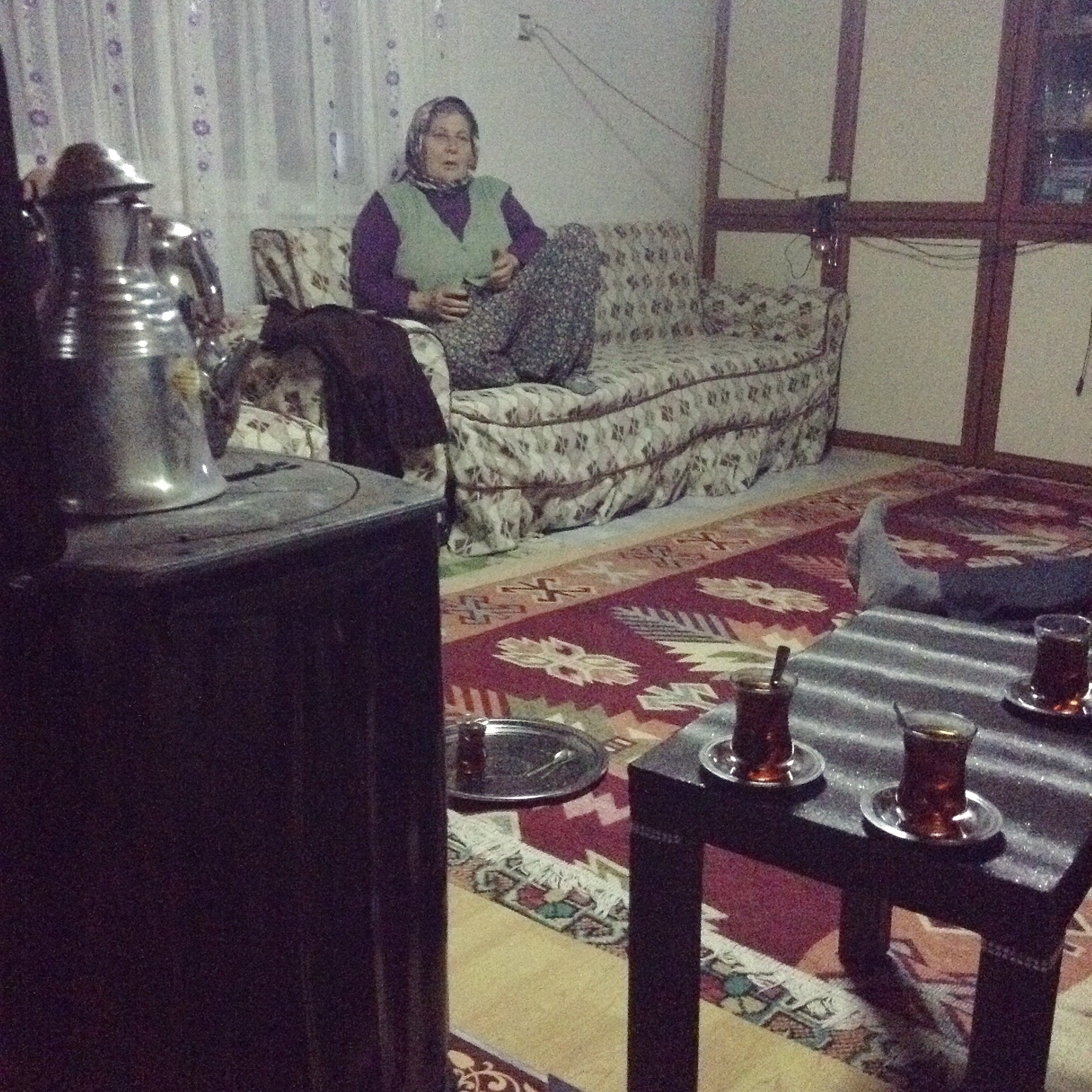
The room we were sleeping in was now freezing as the soba had been turned off all night, so as soon as we woke up we bundled into the living room with the rest of the household and sat around their recently lit soba, there’s something very cosy about the soba, it reminds me of Christmas with everyone sitting around the fire in their pajamas. We weren’t up for long when Berkay’s aunt walked in and started making breakfast right away, as I mentioned previously she’s kind of taken the role of housekeeper on now that Berkay’s mum is sick.
She came out with a tray of breakfast foods, spicy Turkish sausage (sucuk), tomatoes, olives, boiled eggs and some sort of lentil dish which was lovely to dip the bread in! Of course this was all washed down with a few glasses of Turkish tea. While we were eating Berkay’s brother had a phonecall that the daily village delivery of coal had arrived and said that he and Berkay could go an unload it all for some cash. I could have waited in the house with Berkay’s mum and aunt, but I knew that when Berkay said ‘we’ll only be gone 2 hours’ he was talking Turkish time, and I learnt a long time ago that Turkish time means add on at least 2 hours more to everything they say, so I decided to go with them. I had a quick shower, which was much like having a shower at our own house, no hot water from the solar panels and no electric shower meant it was a boiled water from the stove and a jug job – no complaints from me as I’m definitely used to that by now!

We drove to the village centre and as it was freezing cold outside and the boys had work to do, I sat in the warm car watching them and being nosey at the surroundings. I wanted to have a walk around the town, but I would undoubtedly be the only woman down there, so I thought I’d feel a little uncomfortable and decided against it. Instead I sat in the car with my laptop writing a couple of blog posts. I’d look up every so often and see Berkay pushing a heavy wheelbarrow full of sacks of coal into the warehouse while his brother and a friend were on the truck moving the thousands of sacks into his reach. It definitely looked like hard work, and the fact they were sweating when it was a mere 6 oc outside said it all. They briefly stopped for lunch and we all shared some pide, which was delicious. The boys stunk and were covered in black dust from the coal, but eventually 4 hours after they had started their ‘just two hours’ job (*cough*… Turkish time…) they unloaded the last sack and off the truck drove back to wherever it came from. Berkay got 60tl for his effort, which is very good money for just a few hours work, he’d been working here in Calis recently earning 20tl for a 12 hour day! It’s so typical of Berkay to be working during his little holiday, he hates sitting around doing nothing.
When we arrived back at the village house it was around 2pm and more of Berkay’s family had arrived to visit him, his uncle, aunt, cousins and even second cousins were all there to greet us. Berkay’s other aunt had once again been preparing a meal and came out with a huge tray of food for everyone present. We all gathered on the floor, sat around the tray and tucked in – this time it was salad, kuru fasulye, bulgur rice, dried meat and onion and a huge bowl of garlicky yogurt to dip bread into. After our pide we weren’t really hungry but know they get offended if you decline food, no matter how politely, so we ended up eating some anyway.
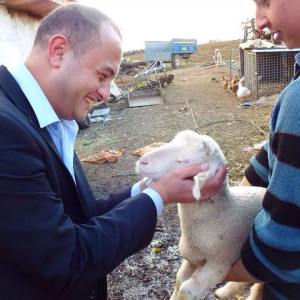
After an hour or two of more chatting and cay drinking, the guests left, Berkay’s mum had a nap, his dad was at work, his brother was busy with the animals and we had some time to ourselves. We had a quick look around their garden and farm area behind the family home, I’d been dying to see the animals ever since we arrived. I love animals and love the idea of having a farm, although I’d be rubbish at it as I’d never be able to bring myself to kill them for meat or sell them, I’d get far too attached. Berkay’s family has a lot of animals – sheep, cows, goats, chickens, turkeys and a dog. Berkay’s dad wakes up at 6am every morning to milk the cows and they use the milk for drinking and for making butter. They have a baby cow which is only a week or two old, they still feed it with a bottle! It was so cute and so fluffy, I stepped into the cow shed and managed to stroke it – I love this photo of it trying to lick my hand – what an action shot! They also have one lamb at the moment, just look how in love with it Berkay was.


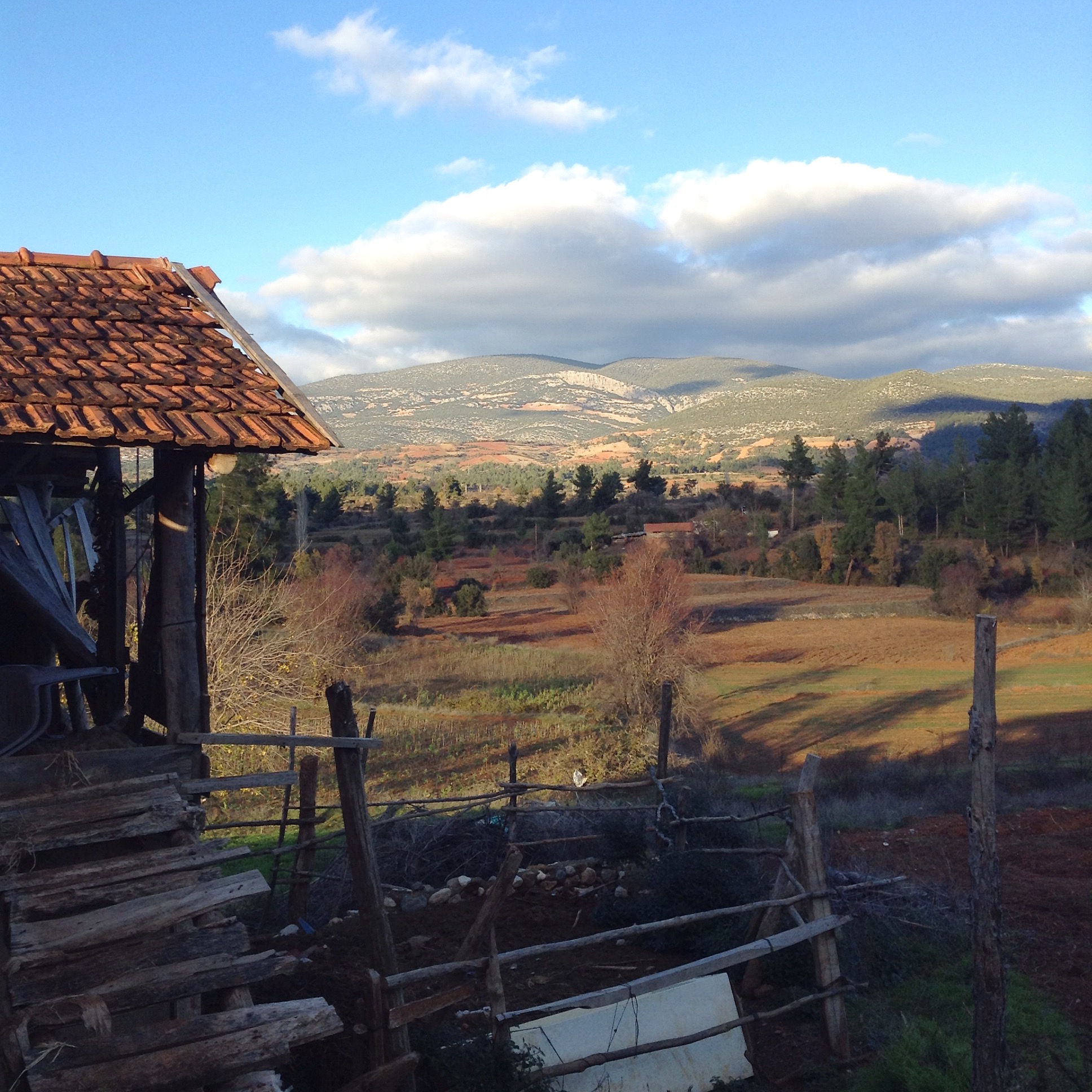
While we were walking around I couldn’t help but think how beautiful and picturesque the scenery was – so much countryside, farms and green hills as far as the eye could see.

Since we had some time to ourselves, Berkay said he wanted to take me for a drive so that he could show me the house he has born in and a few other important places for him around the village. He kept pointing out things his Grandad had made and built, trees Berkay himself had planted as a child with his nan and telling me stories of the things he had done with them. He always speaks highly of his grandparents, they raised him as a baby as his mother and dad abandoned him when he was only 28 days old, he’s still not seen his mother since and knows nothing about her, and although he is on speaking terms with his dad, he definitely had a stronger bond with his grandparents, who have both now passed away, he showed me the cemetery they’re both in too.


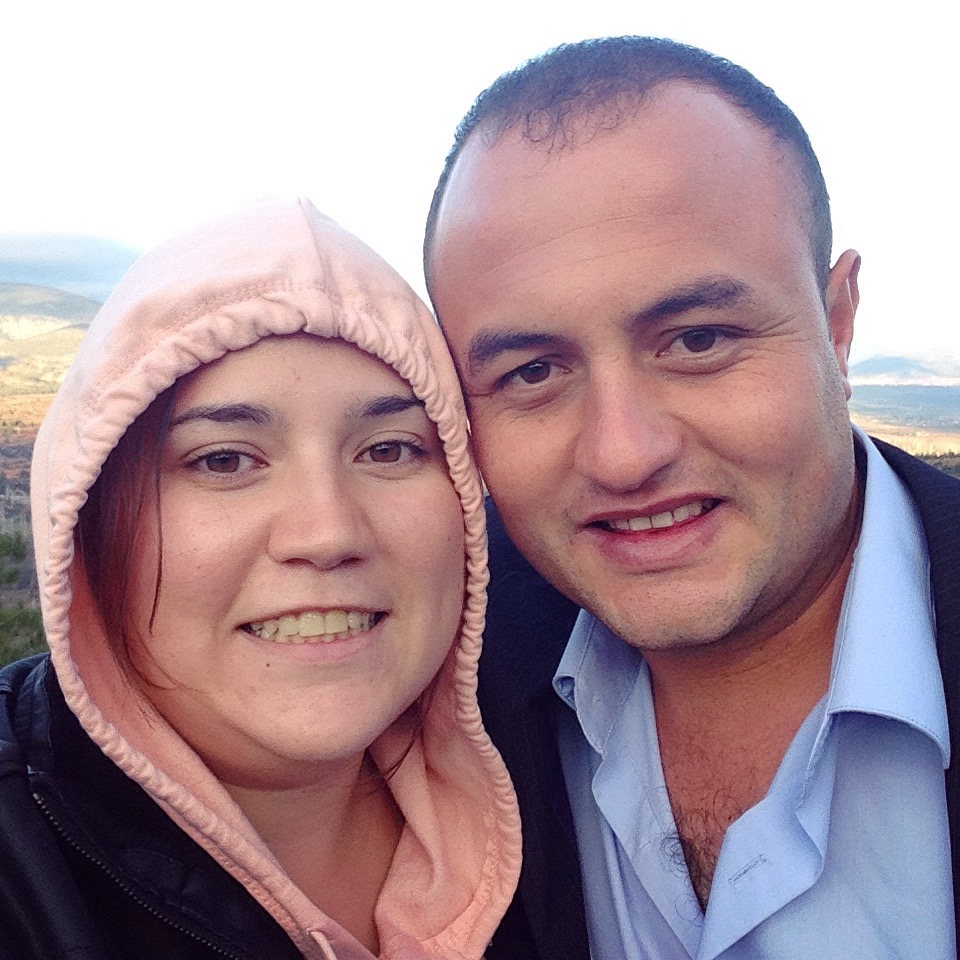
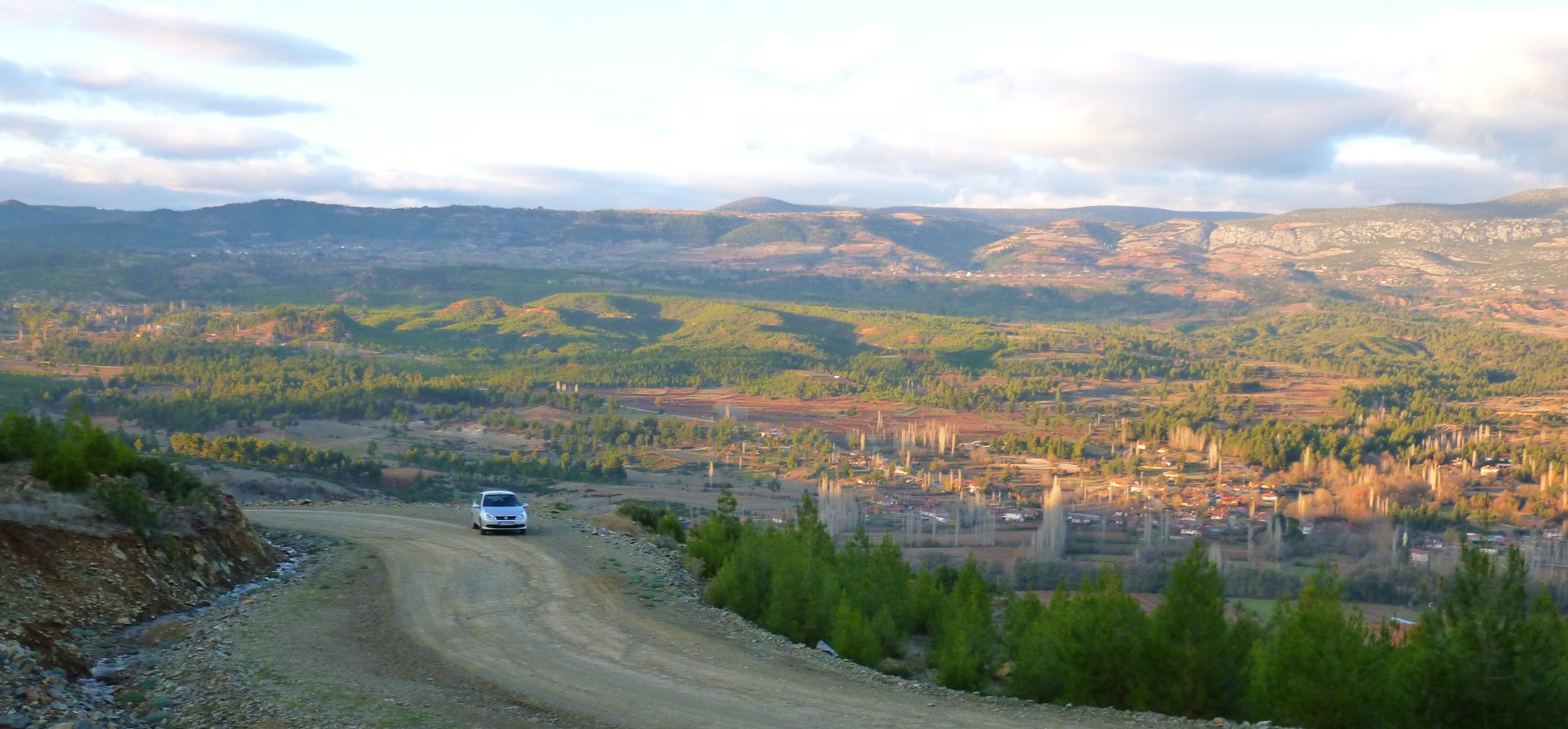
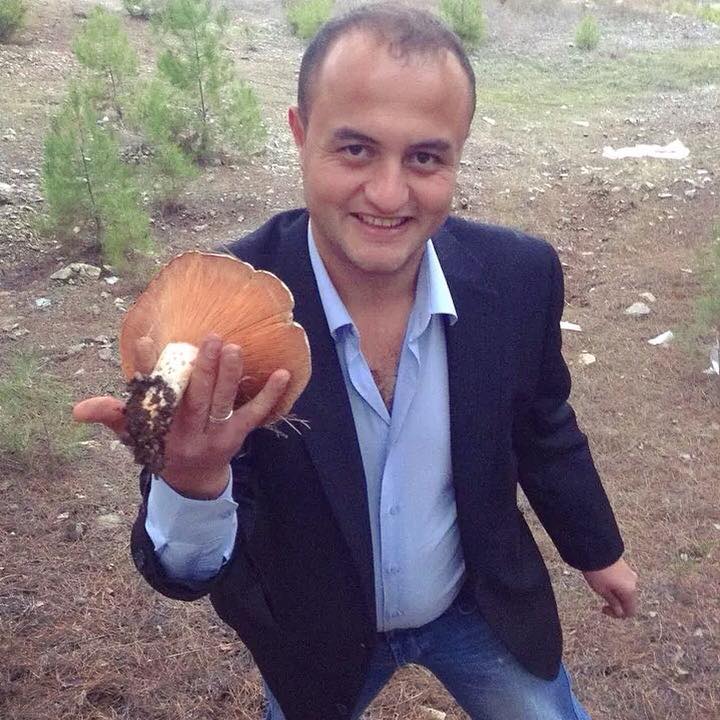
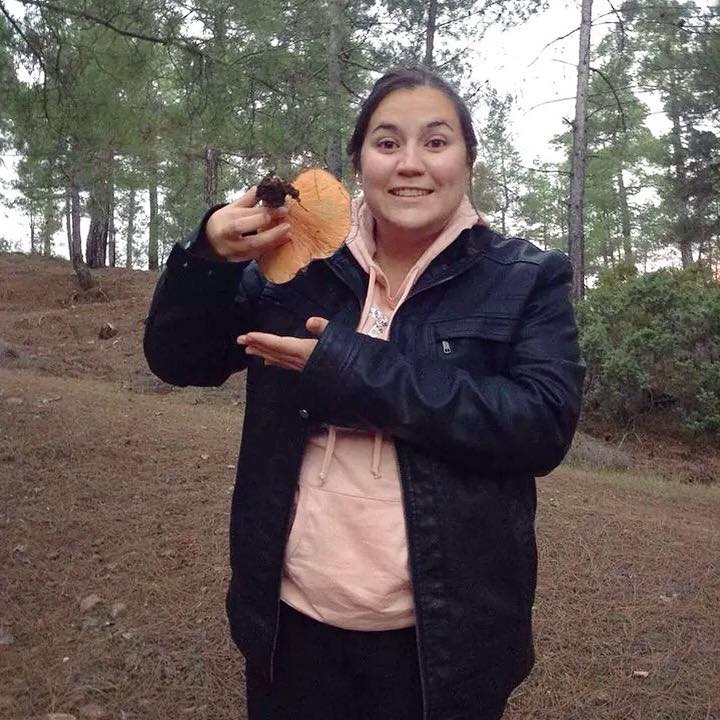
He drove us up to Esentepe just as the sun started to go down and we got out to take a photo of the beautiful scenery – it was pretty to look at but it was freezing cold, I ended up wearing my hoodie and Berkay’s thick leather jacket on top! The sun was just starting to go down but before it did Berkay said he wanted to wander through the trees and try and find some çintar mushrooms – special wild mushrooms that are a seasonal delicacy here in the south west of Turkey. A few minutes after starting searching I heard him shout “Danni, come here, I found one!” he was so excited.

He’s definitely the expert at finding them, he knew how to spot them under a pile of twigs and I was just walking around aimlessly not really knowing what I was looking for… I found a lot of ‘normal’ mushrooms, but no çintar ones, until I spotted a giant orange thing sticking out of the ground.. “look how big this one is…” I said, and then Berkay informed me it was exactly what we were looking for. I was very proud of our little mushroom stash, you’ve heard of the saying “bringing home the bacon”, well we were definitely “bringing home the mushrooms” and we took them all back to Berkay’s family ready to eat on the BBQ the next day.


After all the mushroom picking, food eating and tea drinking, we were exhausted and settled back in the house for the evening. I decided to change my outfit to fit in a bit more and put on my comfy ‘village’ flowery baggy pants. We ended up going to Berkay’s aunts house with his brothers and played OKEY, ate more sunflower seeds and drunk more tea… I was starting to think I’d end up looking like a glass of tea if I drank anymore…

Our village adventure – Day 1
Berkay’s family have been asking us to visit them for a long time and it was just impossible during the summer, however, now that it’s winter and life is moving by at a slower pace, we had the chance to make the trip. His step-mum is quite ill and recovering from an operation so we were hoping our visit would cheer her up a little.
They live in a town called Beyağaç in the Denizli province, it’s a town 1.5-2 hours away from the city centre. Instead of travelling on the bus from Fethiye for 6 hours, we rented a car for a relatively cheap amount (150tl for 3 days) and made the journey in just 4 hours instead, even with the cost of running it taken into consideration, it doesn’t work out much more expensive than the bus tickets, that’s the plus side of having a car that runs on LPG instead of petrol.
We left Fethiye at 1.45 pm on Friday and arrived at the village at around 6.15 pm. I was really looking forward to the drive because I knew it would be beautiful and I wasn’t disappointed, we had amazing views of the mountains and it was a relatively easy journey with nice roads. That’s the beauty of Turkey, you can reach almost any city just by following a single road. When in one place you can see sign posts pointing in all directions, directing you to other cities hundreds of miles away. Imagine being in London and seeing a sign post for ‘Manchester’ – it would be weird, but it’s normal here. So simple.

As we were driving further inland, we began to feel a bit chilly. When we reached a town near Tavas and stopped to fill up on gas, we realised just how cold it was. Freezing. We had to turn the car heater on to defrost ourselves.
Eventually we reached the town of Beyağaç, it’s actually a lot larger than I remember, with a population of 7000 people. Driving through the main town centre I saw a few apartment blocks, a post office, police station, school etc.. and of course the customary Ataturk statue (there’s one of these in every single town in Turkey). It’s very much a working farming town – most of the businesses deal with fixing tractors, delivering and supplying coal, animal food etc..
Berkay’s family live a 5-10 minute car drive from the main town centre, up on a hill surrounded by fields and beautiful scenery. They have wooden shacks behind their house full of animals, sheep, goats, chickens and cows. They use the cows for their milk, eggs and meat. They even make butter from the cow’s milk. Almost every fruit or vegetable they eat they have grown themselves. Everything there is very simple, back to basics.

We went inside and were greeted by his step-mum (from now on I’ll just call her his mum, as he has never met his birth mum), aunt and brother. All gave me a big hug and kisses both sides of my cheeks, as is the norm here in Turkey! ‘Who is that?’ I said to Berkay referring to the neighbours sitting in the living room that also joined in the hugging, ‘no idea’ he said… You have got to love their friendliness! After the welcome greetings were over, I felt a little more relaxed, I’m always nervous about that first ‘hello’ – mainly because I always end up in a panic about the polite way to do it. It’s normal here when greeting someone significantly older than yourself, to kiss their hand and then raise it to touch your forehead. It’s polite and shows that you respect your elders. The only person who really expects this in Berkay’s family is his father (and elderly neighbours etc). As it happened, his father arrived later than us so I had time to prepare for ‘the hand kiss’, I seriously practiced with myself first…
After his father arrived it was time for dinner. Berkay’s aunt is the main carer of the house, she goes every day and cooks, cleans etc, mainly because Berkays mum is ill, but also because her husband died a few years ago and her daughter has her own husband and house to take care of. I think she enjoys going to other people’s houses to spend her time being useful and so that she’s not so lonely.
The village is very traditional, the women do not work, they just stay home, cook, clean and look after the children and animals. I suppose it’s like going back in time 50 odd years in the UK , when housewives were the norm, and not frowned upon like they are today (in my experience, stay at home mums etc are often considered ‘lazy’). If I were to walk around the town centre, I would stick out like a sore thumb and it would be very apparent that I’m not from the area, not because I’m a foreigner, but because I’m a woman. There are just no women wandering around there, ever.
Anyway, the dinner was lovely. We had rice, chicken (fresh from the garden), an aubergine dish, yogurt and some fresh crusty bread. It was served in the traditional way here, in big metal bowls on a large tray on a blanket on the floor. The whole family sits on the floor to eat and shares food from the same bowl/plate, although everyone has their own fork/spoon. I really like this way of eating actually, it used to be a strange concept but now we do it so often it’s normal. It works out well if you don’t like a certain food too, instead of being served a plate of something and feeling under pressure to eat it, you can avoid it and take spoons of something you do like instead, they’ll never even notice! I avoided the yogurt, as I’ve still not quite grasped the concept of having yogurt served with dinner, but very much enjoyed the aubergine as I have become addicted to that since living in Turkey this time!
After dinner, everyone sat down with a glass of Cay and had a gossip, I have no idea what they were saying as I find it really difficult to understand a word. When in Fethiye, I can understand a lot, but there in the village it was different, I don’t know if it’s the dialect or if they just speak at super speed, but I can’t keep up with it. I just sat taking the atmosphere all in instead.

We were then served another large tray of fruit, watermelon, oranges, grapes, apples etc, sunflower seeds, nuts and cake. I didn’t want any but it’s rude to say no so I ended up eating a whole bowl of sunflower seeds, as you do, it’s impossible to eat just one!

We were really tired after the day of travelling so as soon as the neighbours went home at 10pm we headed to bed. Berkay’s mum wouldn’t let us sleep on the sofas in the living room or the cushions in the other bedroom (there’s only one bed in the house)- she made us take her bed instead, even though she’s sick. Bless her. These people might not have much themselves, but they are very welcoming and would give you anything.
Part 2 of our village trip coming soon!