The cost of living in Turkey…

I have been wanting to write this post since I started my blog last year, but I knew it would take a lot of research to get it right, and I also know a lot of people will disagree with me, but after discussing it with someone today, I was determined to post my view on this.

People think living in Turkey is cheap… It’s not. Unless you’re living off a British pension or have an income from other sources in the UK, it’s not cheap to live here at all. When I say to people it’s hard to live off a Turkish wage and that we always end up getting into debt, people tell me ‘you just need to budget better and not have a holiday lifestyle, it’s so cheap to live in Turkey’… I know for a fact that it’s not, and people just do not realise how local people really struggle.

Ok, now a little disclaimer, this is NOT about me. It’s not a pity party. I can get on the next flight home to England if it becomes too hard to live here. This is for the local people, the Turks, the thousands of people working in Turkey who do not have the luxury of choosing where to live or have many job opportunities.

I have always said that living in Turkey is actually more expensive than living in the UK. When you compare like for like, Turkey appears cheaper, but when you consider local wages, you realise it’s not. If you’re an expat in Turkey and have more than £250 a month in income from a pension or other means, you are financially better off than a lot of locals in Fethiye, and all over the country. The minimum wage here is 895tl a month after tax – that equals £255 a month or roughly £3068 a year. (For arguments sake throughout this article I’m using an exchange rate of 3.5tl/£1 as this is the rate being given in town as of today). This is minimum wage across the country. Compare this to minimum wage in the UK which is £6.31 an hour – for 40 hours a week this would be £11,380 a year AFTER tax, or £950 a month, roughly. This means that the minimum wage in Turkey is 3.7 x less than the UK, therefore, for Turkey to have a cheaper cost of living than the UK, the prices of everything would have to be 3.7 x lower than in the UK… let’s look into that and see if that is the case.

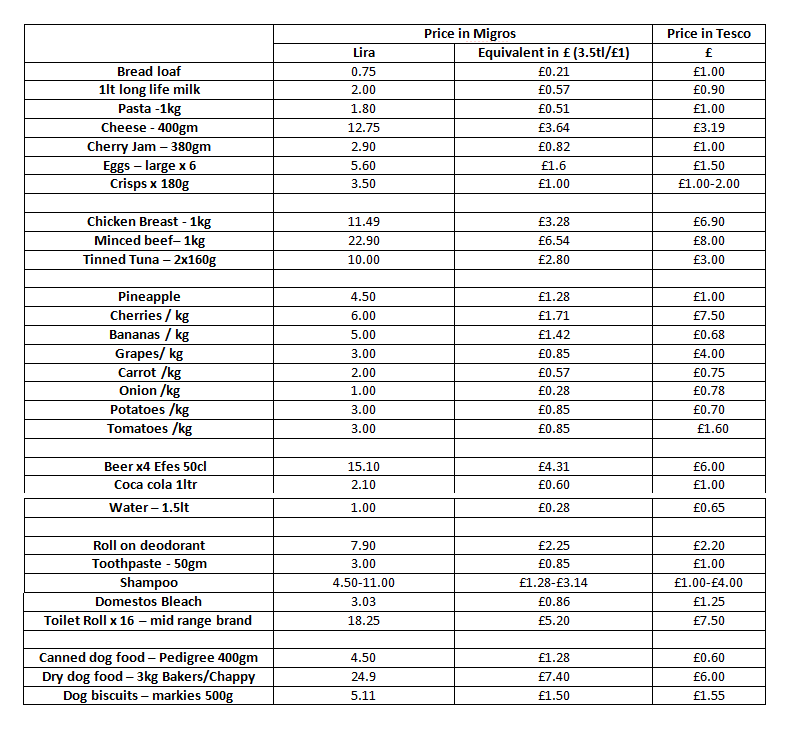
I have investigated the prices of many everyday items – I looked online at two main supermarkets – Migros for Turkey, and Tesco for the UK. These are pretty much the same thing, big supermarkets. Of course there are cheaper options for all of the foods listed, I could have looked at Aldi & Lidl compared to Turkey’s Bim & Sok for lesser known brands and cheaper choices, but for ease I’m looking at the two main supermarkets. The fruit and veg prices were compared using Tesco prices vs Fethiye market prices – the cheapest possible place to find them.

The photo below shows my findings.
prices
As you can see, for most of the products, the price of these when converted into pounds is cheaper in Turkey, but not by very much, and certainly not 3.7 x cheaper. Things like bread, water and some fruits such as grapes and cherries are significantly cheaper here in Turkey, even with the difference in wages. For most things however, when considering the wage difference, are more expensive here in Turkey. For example, I did not find one single house product that was cheaper here, in comparison. Bleach, toothpaste, toilet paper, shampoo and deodorant are all more expensive, along with everyday food items such as pasta and milk.

Meat prices here in Turkey are ridiculous – as you can see from the table all red and white meat is significantly more expensive here when you factor in the wage differences.

Perhaps most shockingly, some of the everyday items are actually significantly more expensive in Turkey without even looking at the wage comparison – cheese, eggs, bananas, potatoes and pet food are all more expensive here in Turkey than it would be if we were shopping in Tesco. There’s also the fact that supermarkets in the UK often have “buy one get one free” deals which I rarely see in shops here.

I see where other expats are coming from – their pounds go further here than at home in England for the most part, but for people living here off a local wage life is very hard and a daily struggle. I have no idea how large families cope.

Groceries aren’t the only things that are more expensive in Turkey. I looked online and compared typical internet broadband prices, in the UK the average price worked out at £230 a year. Here in Turkey we pay around 90tl per month, or 1080tl (£308) per year. Again, that shows that the price of the internet luxury here is more expensive than the UK, without even considering wage differences.

I tried to compare electricity prices, but there are such vast differences in the amount that people pay each month it would be impossible to do a comparison, our electric bills every month are between 30-50tl, while I know others who pay 200tl a month, and I have no idea of the breakdown in prices either here or in the UK.

Petrol prices here in Turkey are far more expensive than the UK before even considering the wage difference. Car prices here are also ridiculous, a car that you would pay £1000 for in the UK is likely to sell for the equivalent of £5000 or more here in Turkey – no wonder I see so many ancient, non road-worthy cars around, nobody can afford models less than 20 years old.
White goods, fridges, washing machines etc and other general household goods here in Turkey are around the same price as in the UK – again when you consider wages are a lot less here, this makes them a lot more expensive in comparison.

Another significant thing here to remember is there is no free healthcare. For local people working their bosses should pay for their health insurance which enables cheaper treatment, and for those not working, the amount they pay for health insurance is means tested, but it’s not free. There are also very little income benefits. In order to be entitled they have to have worked and paid insurance for a certain amount of days in a period of time, Berkay was entitled to it last winter and got 300tl per month, who could ever live off that?

There are things that are cheaper here in Turkey, for example, council tax, road tax, insurance etc, but when everything else is considered, this is so small and insignificant.

Rent prices are a different story. Rent prices are undoubtedly a lot cheaper here in Turkey. From searching online, I found the price of a one bedroom flat in England varied considerably – from £400 in Northern areas, to over £700 in London. In comparison, prices for a one bedroom basic apartment here in Fethiye vary from 300 – 650tl (£85 – £170) – I can’t deny that they are much cheaper here.

You may be thinking to yourself, ‘why dont they work harder to earn more’ – it doesn’t work like that. I can only comment for people working in Tourism, as that is all I have knowledge of, but generally people working in this sector will be stuck in it for life. It doesn’t mean they’re lazy or unqualified (Berkay has a diploma in hotel management!) it just means they have no choice. It’s not like they can take on a second job to bump up their wages either – working days here are long with people working up to 12-15 hours a day, 7 days a week. There is no time for another job.

All of the above isn’t even considering the fact that a lot of people in tourism don’t have work during winter, and those that do are more than likely working for less than minimum wage as their employer knows they are desperate and will work for any money they offer – some take total advantage and do not even pay them at the end of the month, they simply refuse, and because they have been working without insurance and for less than minimum wage they have no option but to accept it.

Im not suggesting the whole of Turkey is poor, there are of course people with very good jobs earning tens of thousands lira a year and people who would be rich even by English standards. But that doesn’t change the fact that for Turkish people, living here in Turkey IS more expensive than living in the UK. I know there will be people who disagree, but if you do the research you might be surprised at what you find.

Let me know if you agree, or disagree, I’m open to all comments. I’m really curious at people’s opinions of the cost of living here in Turkey. Before I moved here I had no idea, I didn’t care, I was ignorant, but it’s something that really fascinates me now and I can’t help but get into discussions about it when I see people saying the infamous words ‘it’s cheaper to live over there’.

Of course there are many positive things about living here, perhaps the quality of life here outweighs the increased cost of living? Let me know what you think.

Thanks for reading, If you got this far, well done, what an essay this turned out to be! 
The best pancakes in Fethiye!

One of my favourite things about living here in Fethiye is market day!

The markets are held on Tuesday in Fethiye town centre and Sunday in Calis, and one of the best things about them is the food on offer at the little trailer cafe’s that are located inside the market areas.

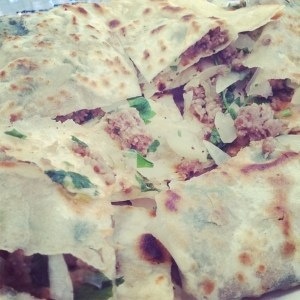
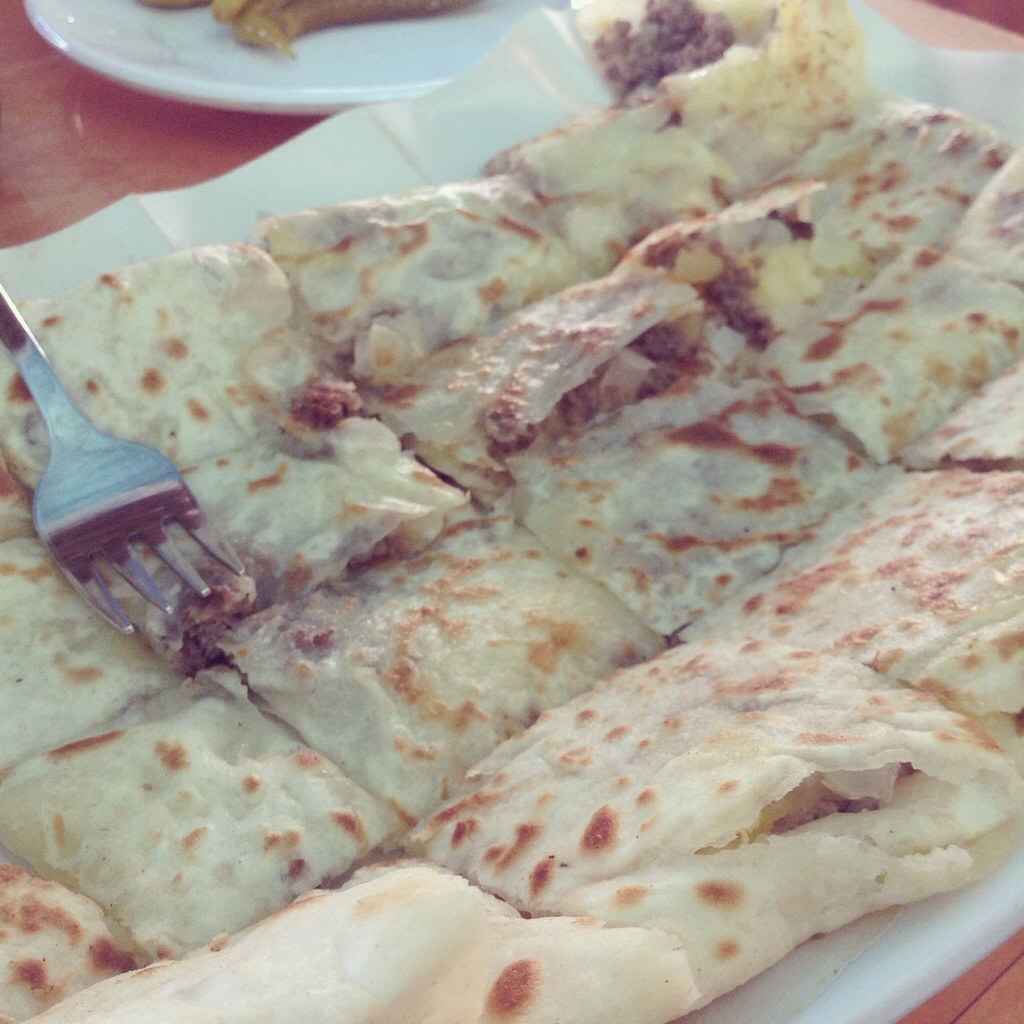
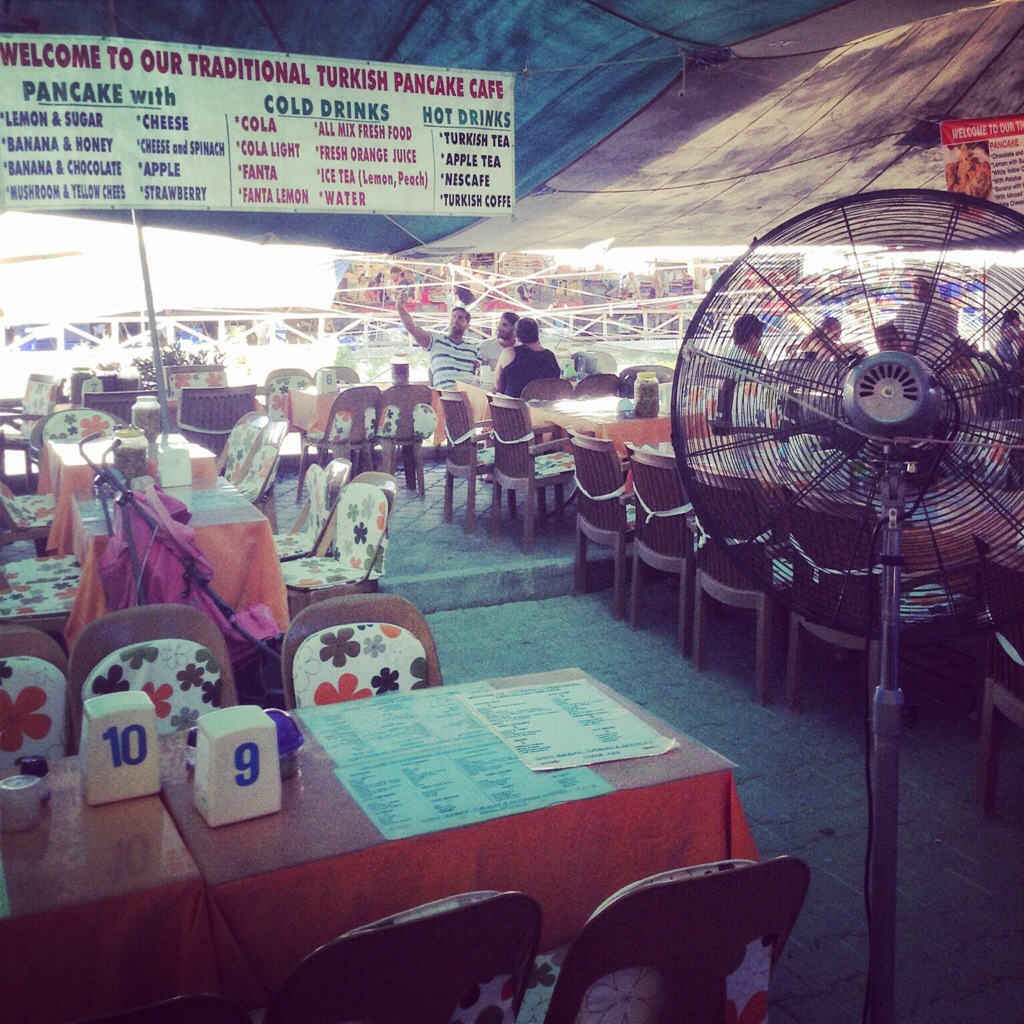
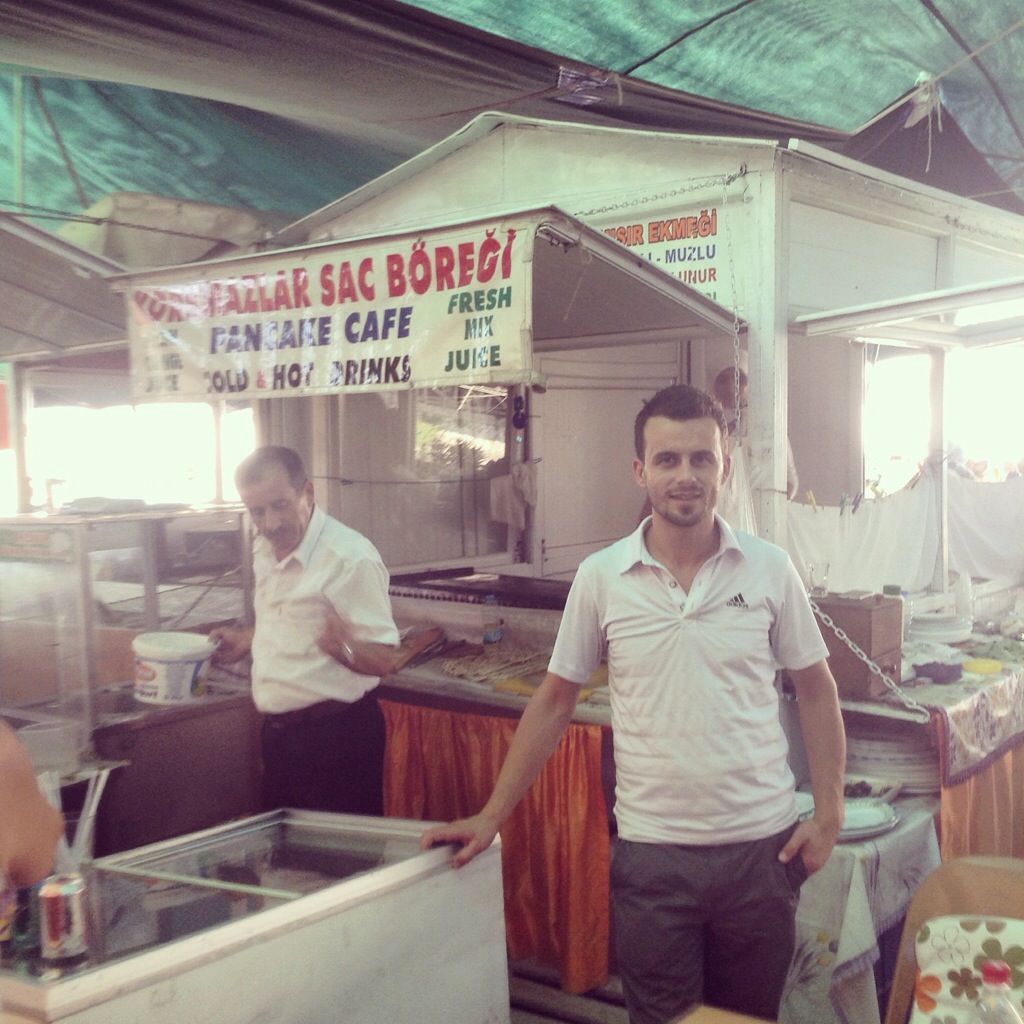
There are all sorts of food on offer, but by far the most popular with tourists are the pancakes or ‘gözleme’.  Our favourite place to get these pancakes is at the cafe in the photo below – it used to be distinguishable from the others as it had a stuffed toy black and white lamb outside, but this has since gone missing. As far as I’m aware the vans don’t have specific names – not that I’ve ever noticed anyway, but if anyone is visiting the area and wants to check out this particular one look out for this sign, and this man, as he is always working there!  (I should add here, he is not paying me to advertise this, he’s an old school friend of Berkay’s but I genuinely think this is THE best place for pancakes in Fethiye!)
20140624-011523-4523601.jpg 20140624-011510-4510725.jpg
They’re not pancakes as we know them – more of a really thin pastry filled with whatever you decide. There are savory ones, like mincemeat & onion, potato & cheese, etc, or sweet ones with fruit fillings like apple, banana & nutella or the good old favourite lemon & sugar. The prices are really cheap and you get a generous size portion, it’s guaranteed to leave you feeling full & very satisfied.
20140624-011527-4527199.jpg 20140624-011524-4524656.jpg
Mincemeat, onion & potato gözleme
20140624-011527-4527422.jpg
Banana & ice-cream gözleme
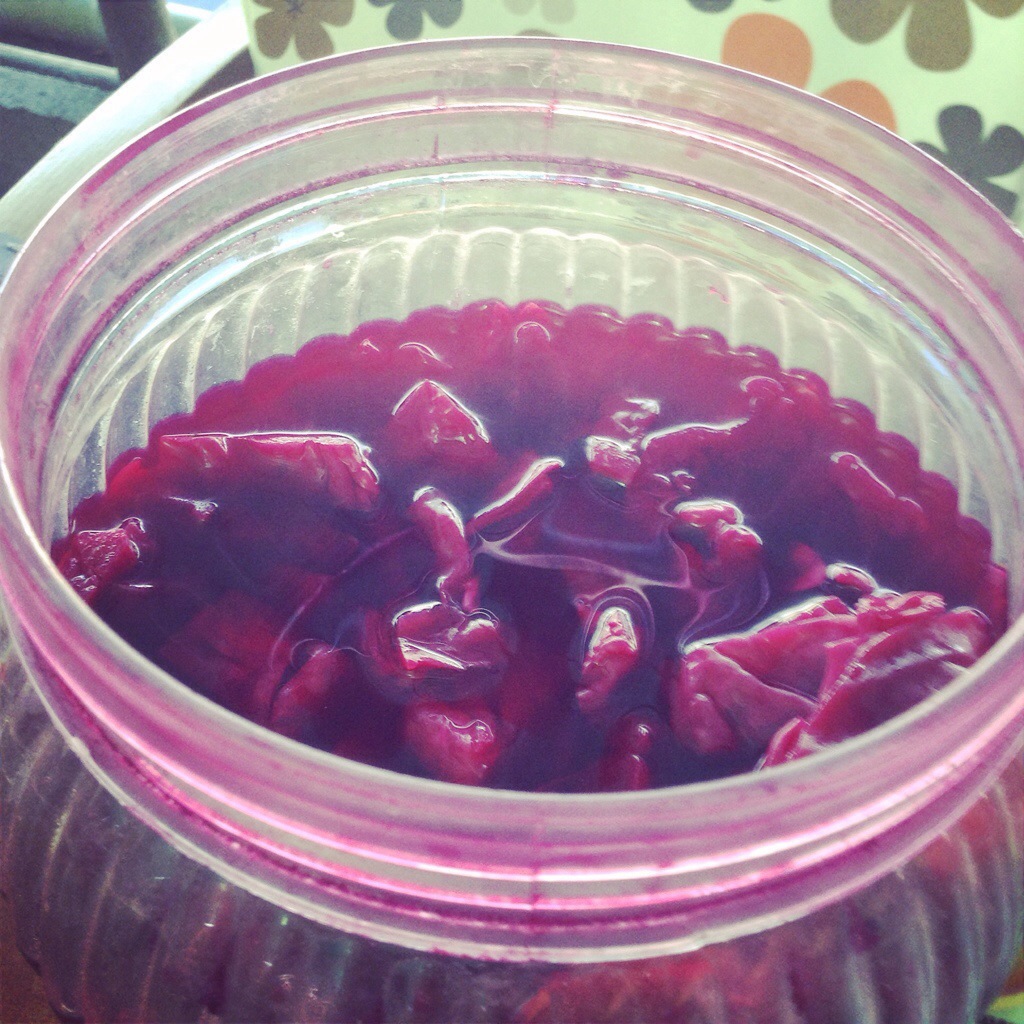
There’s always a big jar of pickled red cabbage and pickled chili peppers on the table to accompany the pancake should you chose to have a savory one. I’d never had a savory pancake until I came here, it might sound strange but it really is a perfect combination.
20140624-011525-4525886.jpg 20140624-011526-4526899.jpg
Just walking past the little trailers inside the market you could be forgiven for thinking they’re not anything special, they are basic with plastic garden chairs and cushions for seating, but it all adds to the atmosphere. Everything is kept very clean, and there’s an open window on the trailer so you can see everything being prepared and cooked by the women – it’s actually really interesting to watch this process, especially how they cook it on the big metal plates.
20140624-011511-4511636.jpg 20140624-011509-4509847.jpg
This place in particular is a family run business and they are really friendly people who won’t hassle you. They must be doing something right as they are always busy, when we walked past with the intention of having some lunch a few weeks ago there were no seats whatsoever so we had to go and do our weekly market shop and go back later on when it was slightly quieter. I posted a photo on my Facebook page last week and lots of people also said they always go to them for their pancakes too so they are very popular.

If a pancake isn’t your thing, they have other food on offer, another favourite of mine is ‘bazlama’ a thick spongy bread sliced in half and cooked with a filling inside, normally white cheese. It’s  almost like a toasty and is very filling, one between two people is more than enough. I love it with cheese, tomato and chili flakes, yum.
20140624-011527-4527816.jpg
They also have really delicious freshly squeezed fruit juice, orange and pomegranate being their specialities, yum! Of course if you want a more authentic experience there’s always the Turkish favourite ayran (a yogurt based drink) which is also made freshly here.

If you’re in the Fethiye/Calis area on market days definitely check out this place – the food is amazing, cheap and delicious. Tomorrow is Tuesday – Fethiye market day, so I know where we’ll be eating our lunch! ❤

Celebrating kurban bayram with Berkay..

***WARNING, THIS POST CONTAINS PHOTOS THAT MAY DISTURB SOME READERS.***

Tuesday 15th October marked the first day of the Muslim festival Eid-al-adha (kurban bayram in Turkish). If you aren’t aware of what kurban bayram is, you can check back at my previous post.. ”what is kurban bayram?” which explains all you need to know.

Most people celebrate bayram with their families, but Berkay is not close to his and doesn’t really keep in touch with them. He also has to work all over the holidays as it is the hotel’s busiest time. Last year we celebrated together with a BBQ and a walk along the seafront, but this year he was alone. Luckily, he has a great friend who works with him at the hotel, someone who he has grown really close to and who is like a father to him (his name is Ergun, he’ll probably be mentioned a lot!). They invited him to their village house for the day to celebrate so he didn’t have to be alone.

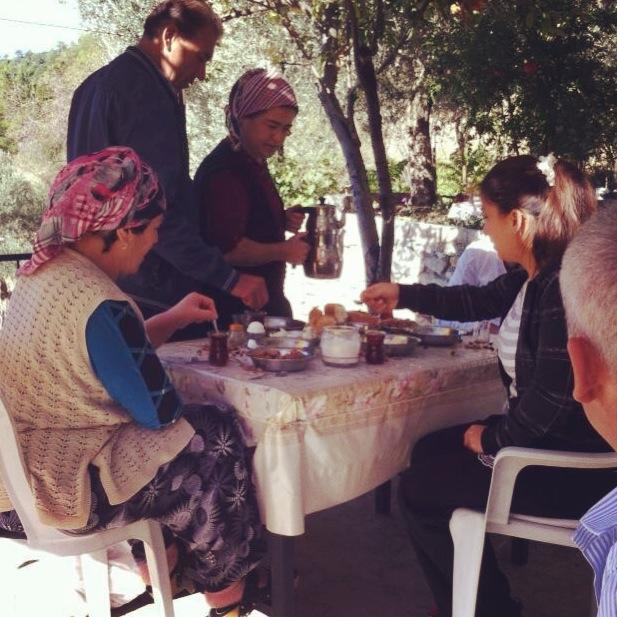
First he went off to Ergun’s brother’s house for breakfast which was the typical Turkish type, eggs, bread, honey, cucumber, tomato, cheese, olives and of course a glass or two of cay!
994954_10152278073228776_1588340989_n
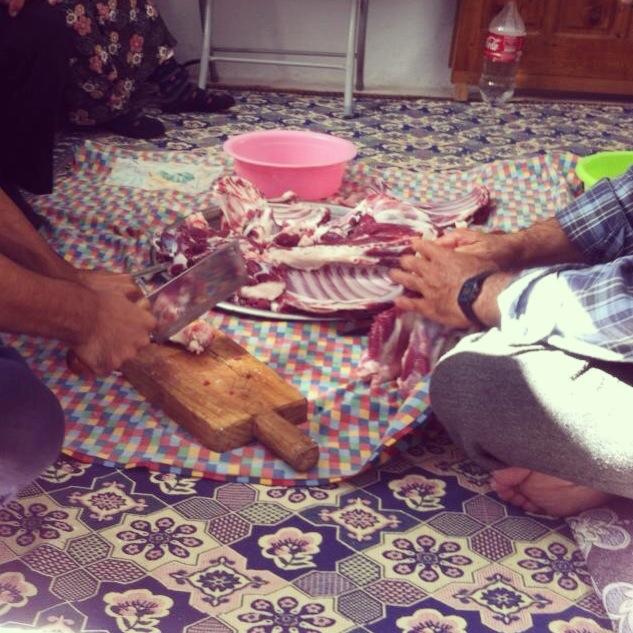
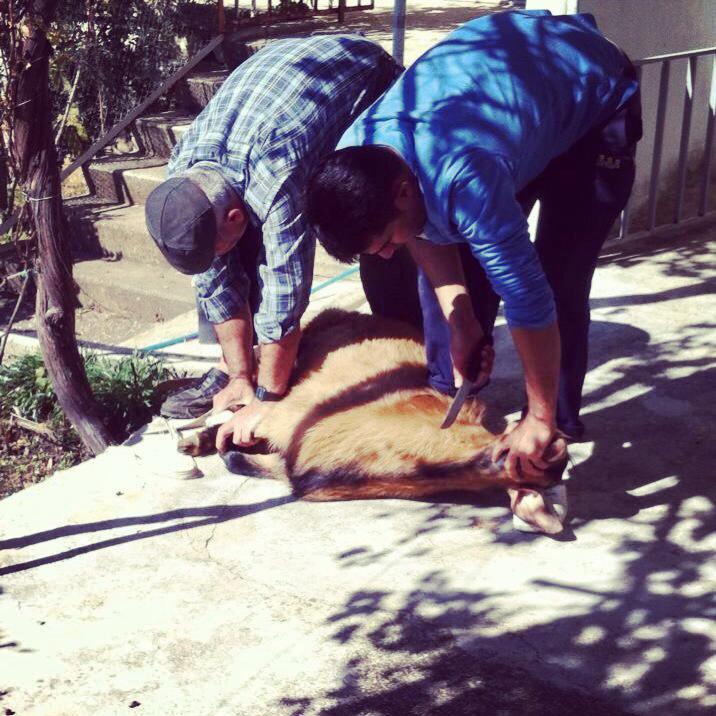
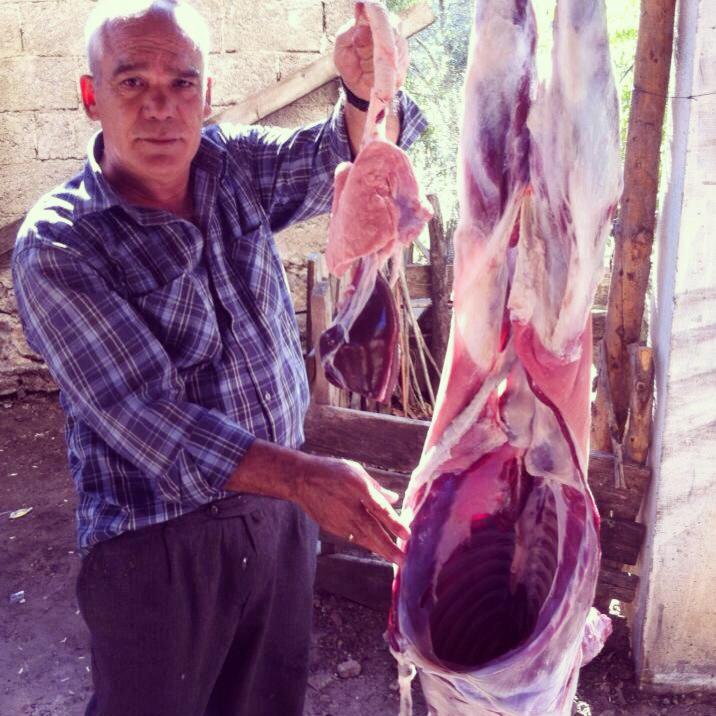
They then went around to a few other family members houses. When they got to Ergun’s wife’s family house, they sacrificed their first sheep. This is something that is supposed to be done by professional butchers, in order to minimize stress to the animal and get it done as fast and humanely as possible. I suspect that an awful lot of people do not actually follow these rules, and carry out the sacrifice themselves, which is what Berkay’s friend and all his family do. Obviously though, the rules are there for a reason, and should be stuck to.

After skinning and cleaning up the first animal, they visited Ergun’s brothers house, and performed the sacrifice over again with another animal, this time a goat.
1377474_10152278074233776_751493669_n
After that, they ate lunch, he didn’t tell me what was on the menu, but I presume it was extremely fresh meat..
1234069_10152278074553776_2033378928_n
After lunch, they returned back to their village house where they sacrificed their own goat.
1375729_10152278074408776_2129081276_n 994940_10152278074778776_58323611_n 1377618_10152278074078776_1906062217_n
I asked Berkay to take these photos for me to share on here and give everyone more of an insight into the whole experience, but I do understand they may offend or disturb some readers, hence the warning at the start of the post.

I have seen discussions saying the act of killing so many animals for a religious festival is barbaric and wrong, although the same people complaining are not vegetarians themselves, and enjoy eating meat. The reason we find it so cruel, is that we are too used to having easy access to meat in supermarkets and shops, meat from animals that are already killed, then cut up and neatly packaged. We pick up the meat off the shelves and take it home to cook without a second thought as to where it has really come from, we don’t think about the poor animal it once formed. Sometimes ignorance really is bliss.

Personally, as long as the sacrifice is done correctly and the whole process is over quickly with limited suffering to the animal, I see nothing wrong with it. Sure, it’s not pleasant and I would never be able to do it myself, but It’s the circle of life, and an important part of celebrating kurban bayram in Turkish culture.

I hope everyone who celebrates Eid had a wonderful few days, now all the remaining sheep & goats can breathe a sigh of relief, until the next bayram..or wedding.. or funeral.. or birth! The Turks sure do like to celebrate special occasions by killing a sheep or two.

What is Kurban Bayram?

As some of you may know, it is Kurban Bayram next week, but what does this mean, and how will it affect your holiday to Turkey?

Bayram literally means festival, or holiday, and is used to describe national and religious holidays in Turkey. There are two main religious (Islamic) holidays, one being Seker Bayram (celebrated after Ramadan), and the other being Kurban bayram, which is celebrated next week. In the UK this is known as Ed-al-Adha.

Kurban Bayram is the festival of the sacrifice, where millions of people sacrifice an animal to commemorate the Islamic prophet Ibrahim’s willingness to sacrifice his son as an act of obedience to God. Animals such as cows, goats and most often, sheep, are sacrificed. Once sacrificed, the meat is shared out, some is given to the poor, some is kept for the family, and some is given to other relatives, friends and neighbours. Of course Kurban Bayram/Eid isn’t just celebrated in Turkey, it is celebrated by Muslims all over the world.

This year, preparation for Kurban Bayram begins on the eve of the festival, the 14th October. Kurban Bayram will run from and including 15th-18th October and government offices, schools, post offices, banks, and some supermarkets will be closed throughout these days. Turkish people will be busy visiting family and friends, so roads, transport, hotels and restaurants will be very busy and full during the festivities.

What is my experience?
I was living in Turkey last year for Bayram and the atmosphere during this time is very special, it’s even something an outsider who doesn’t celebrate can sense. The only thing I can compare it to is Christmas. All the family comes together and enjoys time off from work and school to celebrate.

Berkay came home from work on the morning of the first day of Bayram and said our landlord had invited us downstairs for Turkish tea and to see the animal they were sacrificing. We stood on our balcony and watched as he tied the sheep up, said a prayer and slit its throat. It was all over very quickly. After he had killed it, he cut it’s head off, hung it up and began to skin it, then he cut its feet off, finished skinning it and cut its organs out. The wool and skin was left out to dry and the blood all washed away. That was it. My landlord is practically a farmer and owns sheep, goats and chickens so he was able to perform the sacrifice on his farm land, however, normally the sacrifice is supposed to be carried out by a professional in designated areas. It is not supposed to be done publicly in parks or playgrounds nowadays.

The sacrifice was over very quickly and it was very humane, it could be very disturbing for some people to watch though. It upset me a little, but it’s good to be reminded where your food comes from. Meat is so readily available in supermarkets these days that we all take it for granted and don’t really stop to think about where it really comes from.

The meat is given out to poor people, friends and neighbours. We got given a whole leg, it was a bit weird seeing it in my freezer.

In the evening we all gathered around for a barbeque downstairs in the garden (we all know how Turks like their bbq’s, don’t we?!) and of course the only thing on the menu was the meat that had formed part of a fluffy white sheep in my garden only a few hours earlier.

I have seen comments from people in the past who say the process of sacrificing millions of sheep over a few days for a religious festival is barbaric and inhumane, however, the meaning behind the tradition and the process of giving meat to those less fortunate people is a good one in my opinion, it is not meaningless killing for the sake of it, it has a purpose. Some people do find this an outdated, old fashioned tradition and some modern families like to donate money to charity instead.

Those normal tourists on holiday are very unlikely to see anything going on, they will probably be blissfully unaware of the sacrificing going on, as I mentioned above, it is often only done in designated areas in main towns. In the days leading up to Kurban Bayram you may see truck loads of sheep and goats being taken to towns, villages and cities. You will know the fate of those livestock on board. You may notice restaurants and hotels more busy than normal so it’s a good idea to book in advance if you plan to visit or go out during the next week. Remember banks will be closed and ATM’s may run out of cash. It is a nice idea to wish people happy holidays by saying ”Iyi Bayramlar”.

Overall, my experience of Kurban Bayram is a good one, It is more than just a bunch of crazy Turk’s cutting sheep’s heads off, in most cases, it is a traditional, civilized, family celebration of a religious festival. 
I wish I were there this year!